
Pheasant in California
The ring-necked pheasant (Phasianus colchicus): not native, long established, and now a bird of a few specific places where water and weedy edges still line up.
Pheasant is the bird Matt grew up on — rice edges, sloughs, and long walks down weedy checks in the Central Valley — and it is the California upland bird whose future is most clearly written in habitat. Wild roosters persist where somebody still leaves a margin uncut and shallow water on the land: a handful of state wildlife areas, the national wildlife refuges, and the farm country around them. Most pheasant hunting in the state now happens on licensed clubs over released birds, and that is where plenty of California dogs get their reps. This page is about the wild bird, and about how to hunt it legally on public ground.
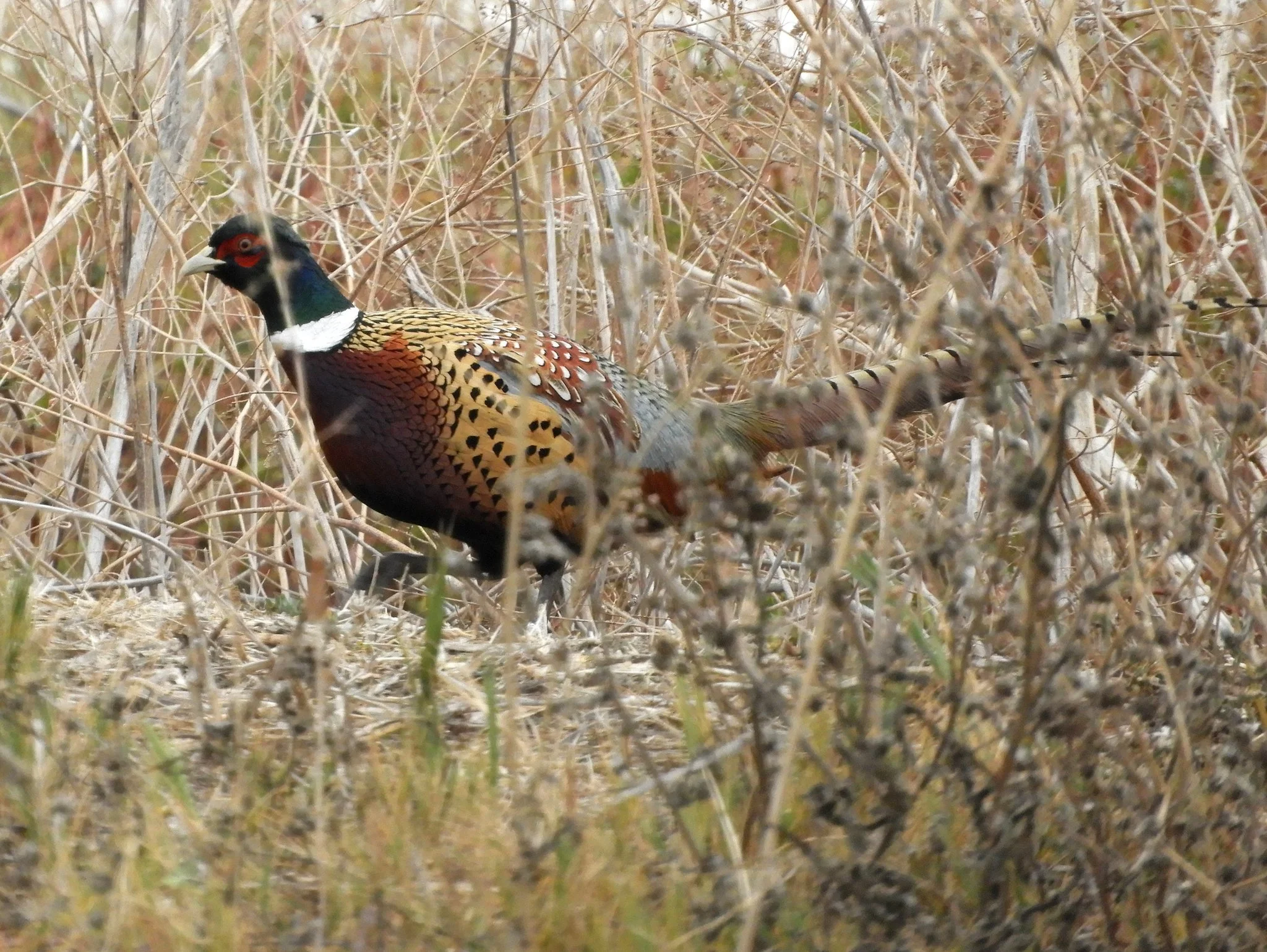
A wild rooster in tule-edge cover in the Sacramento Valley in December. Photo: Mary K. Hanson / CC BY 4.0 — source
2026–27 Season at a Glance
General season: Saturday, Nov. 14, through Sunday, Dec. 27, statewide.
Daily bag: two roosters on each of the first two days, three roosters a day after that. No hens in the general season. Possession is triple the daily bag.
Archery only: Oct. 10–Nov. 1 and Dec. 28–Jan. 24. The archery bag may include one hen.
Shooting hours: 8 a.m. to sunset, not the half hour before sunrise that governs quail and chukar. This catches people every November.
Paperwork: a California hunting license and the upland game bird validation (not required on a junior license). Type A wildlife areas, which include the Sacramento refuges, also require a hunting pass, and Tule Lake has its own refuge pass.
Shot: nonlead only, statewide.
Checked against CDFW's 2026–27 seasons and limits on Oct. 7, 2026. Wildlife areas and refuges set their own hunt days and entry rules on top of the state season; read the unit's page before every trip. The CDFW upland game bird page is the authority for the season.
Know the Bird
A wild California rooster is long, wary, and fast: jade-green head, red face wattle, white neck ring, copper flanks marked in black, and a long, barred tail. Hens are mottled brown with shorter tails, and they flush too. In flat November light against tules, a hen gets up looking a lot like a rooster for half a second — if you haven't seen a white ring or rooster color, the bird hasn't earned the shot. There's no wild-pheasant future in California that survives careless hen mortality.
Pheasants would rather run than fly, and they are very good at it. Wild birds here travel in strips rather than blocks — ditch banks, check edges, tule margins, the uncut strip between grain and water — because that is the only habitat left in most of the valley. The windows are the first two hours after the 8 a.m. start and the last two before sunset.
Where the Wild Birds Persist
California hunters took an estimated 28,757 pheasants in 2023–24, and it is a Sacramento Valley story: Colusa County alone accounted for 8,426 (CDFW harvest survey). On public land, wild-bird pheasant hunting runs through three agency hunt programs:
The Yolo Bypass Wildlife Area. A CDFW wildlife area on the flood-control bypass just west of Sacramento. Hunting is on set days with a pass; check the area's page for the schedule and reservations.
The Sacramento National Wildlife Refuge Complex. Sacramento, Delevan, Colusa, and Sutter refuges open their free-roam and pheasant-only areas to pheasant on regular hunt days — Wednesdays, Saturdays, and Sundays — from 8 a.m. to sunset. They are Type A areas, and a federal duck stamp is not required if pheasant is all you hunt.
Tule Lake National Wildlife Refuge. In the Klamath Basin on the Oregon line. For 2026–27 the refuge runs pheasant and quail from Nov. 14 to Dec. 27, 8 a.m. to 2:30 p.m., on a Refuge Recreation Pass.
Elsewhere it is private ground, clubs, and the occasional CDFW or California Waterfowl drawing hunt. Before you go, our public land designations guide explains the pass types, and our Harvest Map shows the harvest by county.
How They're Hunted
Matt learned the bird on Central Valley rice edges and sloughs, and the method hasn't changed much since:
Hunt the strips, not the fields. Walking the open middle of anything is exercise.
Push cover toward an end. Roosters run ahead and flush wild off the far end, so work toward a canal, a flooded unit, or a partner standing quietly at the end of the strip.
Stop. A running rooster holds when the walking stops. Every few dozen yards, stand still for half a minute.
Bring a dog that will go into the wet stuff. Flushing breeds and close-working Labs earn their keep in tule and cattail, and a downed rooster in cold water is lost without a dog that will take the line.
Calibrate your expectations. Public-land wild pheasant here is a low-density game. Two wild flushes and no birds is a normal day; a two-rooster day is a great one.
The caveat worth saying plainly: club birds and wild birds are different animals. A dog and a shooter who learned on released birds will both be surprised by a wild Yolo rooster the first time.
Start Here
California Pheasant Genetics: What DNA Research Means for the Sacramento Valley. CDFW's wild-rooster genetics work, and what it could mean for recovery.
California Public Land Designations: Where Upland Hunting Is Legal, Restricted, or Closed. Type A passes, refuges, and the land you can't hunt.
Your Upland Stamp at Work. The $10 inside your validation pays landowners to keep nesting cover for wild pheasants.
Our full pheasant guide publishes ahead of the Nov. 14 opener, and it will lead this page when it does.
More on Pheasant Country
Reading California's Upland Harvest: A County Map of Where the Birds Were Taken in 2023–24
How to Scout Public Land for Upland Birds Without Leaving Your Couch
Nonlead Ammunition for California Upland Hunters: 2026–27 Supply Planning
Further reading: CDFW's pheasant species page and Cornell's ring-necked pheasant account.
Other California Upland Birds
Doves · Quail · Chukar · Sooty and ruffed grouse · Band-tailed pigeon · White-tailed ptarmigan · Wilson's snipe · All species
One email each Sunday: what opened, what we published, and what we're working on. Subscribe to the weekly digest.
Photo credit: wild ring-necked rooster, Sacramento Valley — Mary K. Hanson / CC BY 4.0 — source