California Upland Hunting Resources
The bookmarks we actually open — regulations, maps, weather and water, bird biology, dogs, gear, and the people doing the habitat work — organized the way a season unfolds, with our own field coverage next to each.
Every one of these links is a page we go back to. Some we open in July when we are planning, some the night before a hunt, and a couple we check from the truck with one bar of service. Nothing here is a directory pulled from someone else's list — if we have not used it, it is not on the page.
Regulations change; forum posts don't. Start with the California Department of Fish and Wildlife (CDFW) every year, before anything else. We re-check every link on this page ahead of each season. Last checked: September 2026.
Start Here: Regulations, Licenses, and Seasons
CDFW Upland Game Bird Hunting. The primary source for California's current upland seasons, bag limits, zone maps, and license requirements. The current-year regulations booklet, the quail, grouse, and band-tailed pigeon zone maps, and the hunter survey reports all hang off this one page. Check it first, every year.
California Hunting Digest. CDFW's annual digest — the plain-language version of the regulations, the one worth keeping on your phone. We still confirm anything load-bearing against the booklet itself.
Buy licenses and validations online. Hunting license, the Upland Game Bird Validation (the "upland stamp"), and the HIP validation you need for dove, band-tailed pigeon, and snipe. Fees are on the hunting license page. Your upland validation dollars go into the Upland Game Bird Account — we wrote about where that money actually goes.
Nonlead ammunition. Nonlead is required for taking any wildlife with a firearm anywhere in California, and that includes every upland bird. CDFW keeps the certified nonlead list. Our planning notes: supply planning for the 2026-27 season and what nonlead shot does at 25 yards on dove.
California Hunter Education. Required for a first license. Also where the CDFW Advanced Hunter Education clinics live — the upland and dog clinics fill fast.
Our season coverage. Planning the 2026-27 quail and chukar season: zones, dates, and bag limits and California dove regulations 2026-27: HIP, limits, lead-free zones. Both are written against the booklet and say plainly where a date still needs confirming.
Maps and Scouting
onX Hunt. The standard for public-land mapping in California — Bureau of Land Management (BLM), U.S. Forest Service (USFS), state wildlife areas, and private boundaries, with offline maps. Essential for chukar canyons and oak-woodland edges where the boundary is a fence you cannot see from the road.
CalTopo. Free in the browser, and the layers earn it a place next to onX: slope angle, fire history, public-land ownership, and Motor Vehicle Use Maps, printable at whatever scale you want. This is where we build a shortlist before the season — see building the e-scouting shortlist for a NorCal public-land season.
CDFW Lands Viewer and CDFW places to visit. The interactive map of every CDFW wildlife area and ecological reserve, and the property pages that carry the hunt days, entry rules, and camping details. We used both to work out where to camp on opener weekend in the Sacramento Valley.
BLM California. Fifteen million acres, most of it open to hunting, including the Owens Valley, the Mojave, and the Modoc Plateau. The field office pages carry unit-specific maps and access notes. Our planning pieces for two of those: a first trip to Owens Valley chukar country and a Modoc Plateau chukar hunt.
USFS Pacific Southwest Region. Eighteen national forests and the visitor maps and Motor Vehicle Use Maps that decide which roads you can actually drive in October. Check the forest's own page for closure orders after a fire season.
CDFW Special Hunts and the SHARE program. Lottery hunts on wildlife areas and on private ranches enrolled in SHARE — some of the only ways onto pheasant ground that is not a club. The application windows are short; check both pages in summer.
Google Earth. Free and underrated. Satellite view in late summer, when vegetation is at its driest and most readable, shows water, brushy draws, escape cover, and terrain transitions that do not print on a topo. Where the birds were taken last is its own kind of map: our county-by-county read of the 2023-24 harvest.
Weather, Water, and Habitat
U.S. Drought Monitor. Upland bird numbers — California quail especially — swing hard with precipitation. The late-summer map tells you more about where October coveys will be than most scouting reports. The biology behind that: how spring rainfall shapes valley quail chick survival.
California Data Exchange Center (CDEC). The state's precipitation and snowpack data, station by station. Useful for reading a specific drainage rather than a county-wide color on the drought map, and for the May greenup read on bunchgrass that we use to guess at fall bird numbers.
CAL FIRE incidents and InciWeb. Active fires, closures, and perimeters. A two-year-old burn can be the best quail cover in a county; an active one closes the road. Our 2026 burn-scar planning map walks the difference.
National Weather Service. Point forecasts for a canyon, not a city. In September the number that matters is the afternoon high — for the dog first. See the four weeks that decide October for how we plan around it.
Bay Nature. California's best publication for ecosystem-level natural history — rigorous, place-specific, and well written. Understanding chaparral succession, drought ecology, and oak-woodland dynamics makes you a better hunter, and this is where to learn it. For chukar, water is the whole story: mapping chukar water in the off-season.
The Birds
Cornell Lab All About Birds. The best free natural-history reference for every California upland species — range maps, habitat, behavior, and calls. Invaluable for understanding where mountain quail winter versus where chukar hold in a dry year.
eBird. Recent sightings by county and hotspot, with seasonal bar charts. It is a birding tool, not a hunting map — treat it as presence data and confirm on the ground — but it will tell you a band-tailed pigeon flight has started before anyone on a forum does.
iNaturalist. Geotagged observations, useful for the plants as much as the birds: where the bitterbrush, the manzanita, and the wild oats actually are.
CDFW hunter survey reports. The statewide harvest estimates by species and county, back to 1950. Dry reading, and the closest thing to ground truth on where the birds are taken.
Our species guides. California valley quail · Mountain quail · Dove · Band-tailed pigeon, California's overlooked upland migrant · Sooty grouse spring scouting · Pheasant genetics and what DNA research means for the Sacramento Valley · Coastal sage scrub and Central Coast quail. All of them on the Birds page.
Dogs
NAVHDA. The North American Versatile Hunting Dog Association — California chapters run training days and the tests that give you an honest read on a young dog. The best place to meet handlers who hunt the same ground you do.
What we have learned the hard way. Foxtail season: what handlers and vets watch for in summer · Heat safety and off-season conditioning as temperatures rise · Heat, shade, and water strategy: don't cook your dog on September 1 · Picking a puppy from a California litter · What Peter carries for Alan. Gear we have written up: dog training and first aid.
Gear and Ammunition
Our gear pages. More than a hundred single-item write-ups — vests, boots, shotguns, nonlead ammunition — plus the longer pieces: brush pants and chaps for California chaparral, glassing optics for chukar, and pre-season clay practice.
CDFW certified nonlead ammunition. The official list. Pattern what you buy before the opener — here is the July range session we planned for nonlead dove loads.
Community, Conservation, and Giving Back
Quail Forever and Pheasants Forever. The habitat organizations for the birds we hunt — chapter workdays, banquets, and policy work directly relevant to California quail, mountain quail, and Gambel's quail. A North Valley chapter formed in Redding, and May is when the habitat work happens.
California Waterfowl upland program. Despite the name, California Waterfowl runs public-access upland hunts, pheasant mostly, funded in part by the Upland Game Bird Account. Worth an application.
CDFW Upland Game Bird Account grants. Where the upland validation money goes: guzzlers, habitat projects, and public-access hunts, listed project by project.
California Fish and Game Commission. Where seasons and regulations are actually set. Meeting calendar, agendas, and how to comment. If you have ever complained about a bag limit, this is the room.
SCH Outdoors. California's most active general hunting forum, with a dedicated upland board and members who have worked the same ground for decades. One of the few places online where California-specific public-land intelligence gets shared by people who hunt it.
Project Upland. The best national upland publication for field craft, dog work, and species-specific technique. Not California-specific, but the depth of bird knowledge and the quality of the writing make it required reading.
Why we care, in our own words. Why upland hunters should be rooting for the Center for Biological Diversity · The Presidio quail reintroduction.
Follow California Upland: Instagram · Facebook · Substack
Photo credits
Every photograph on this page is Creative Commons or public domain, via Wikimedia Commons, in order of appearance:
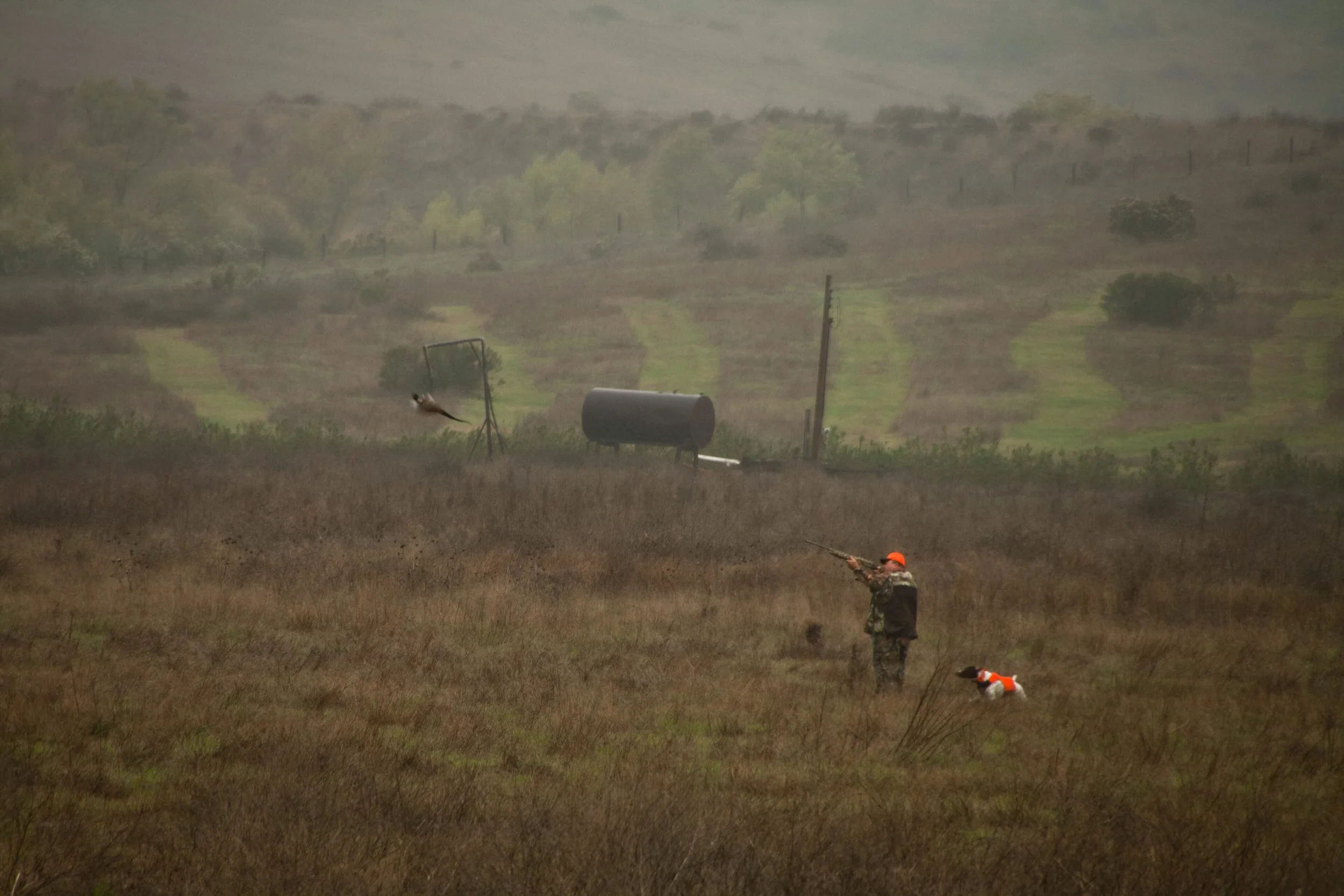
A hunter and his dog work a field edge on a foggy California pheasant hunt — California Department of Fish and Wildlife / CC BY 2.0 — source
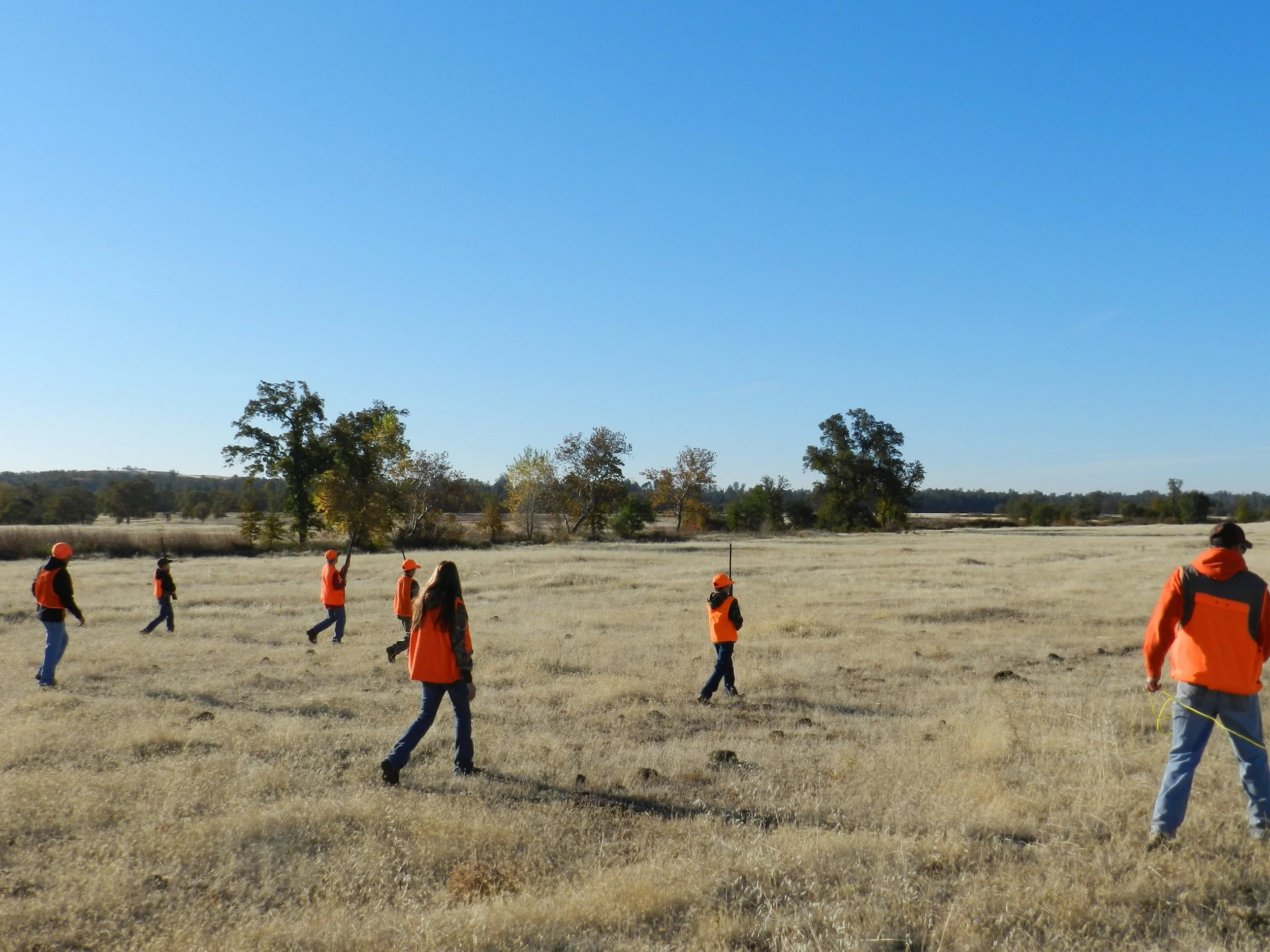
Hunters cross blue-oak grassland on the Sacramento River Bend — BLM California / public domain — source
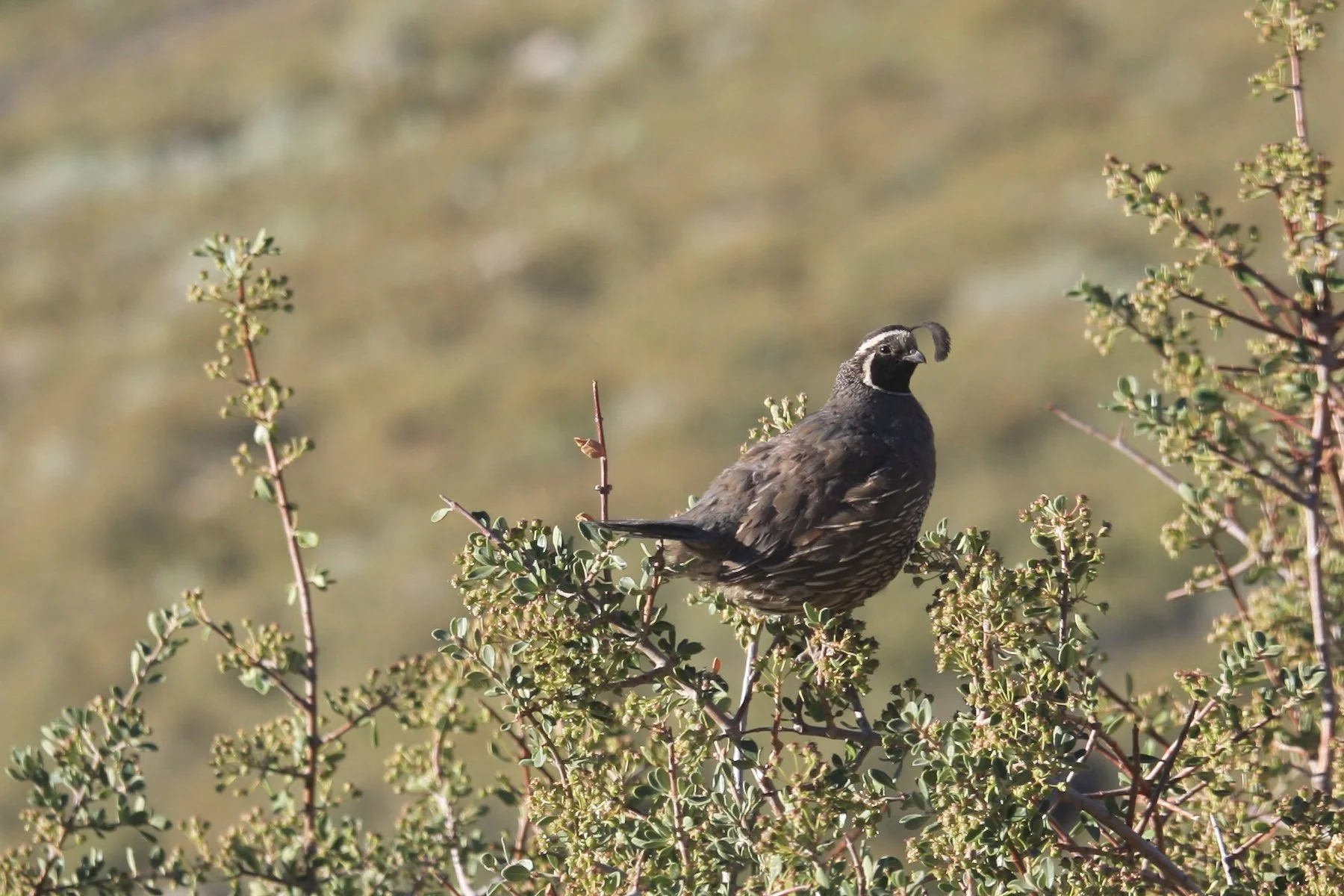
A male California quail on antelope bitterbrush near Swall Meadows — Dcrjsr / CC BY 3.0 — source
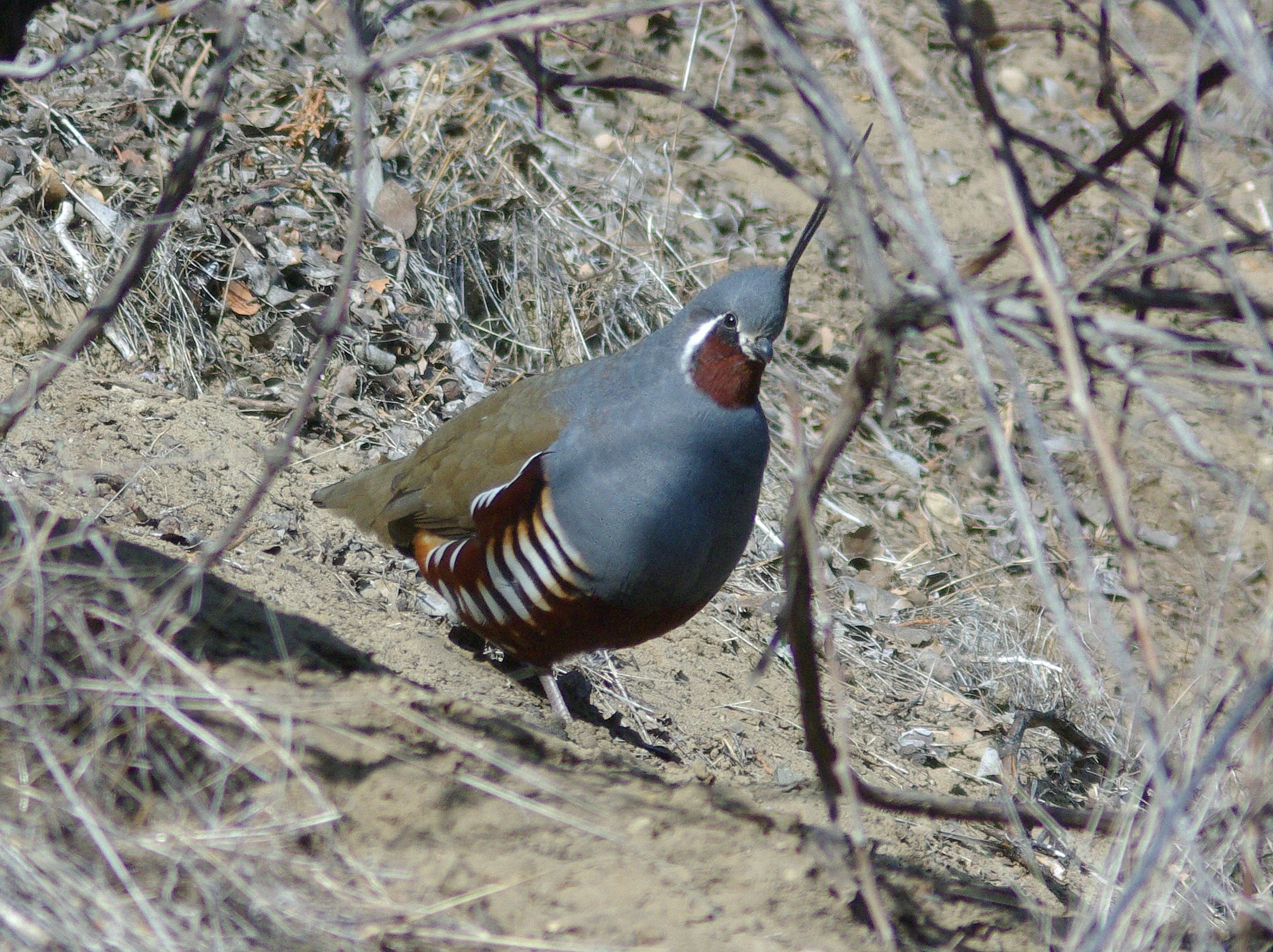
A mountain quail in San Luis Obispo County brush — Alan Schmierer / CC0 — source
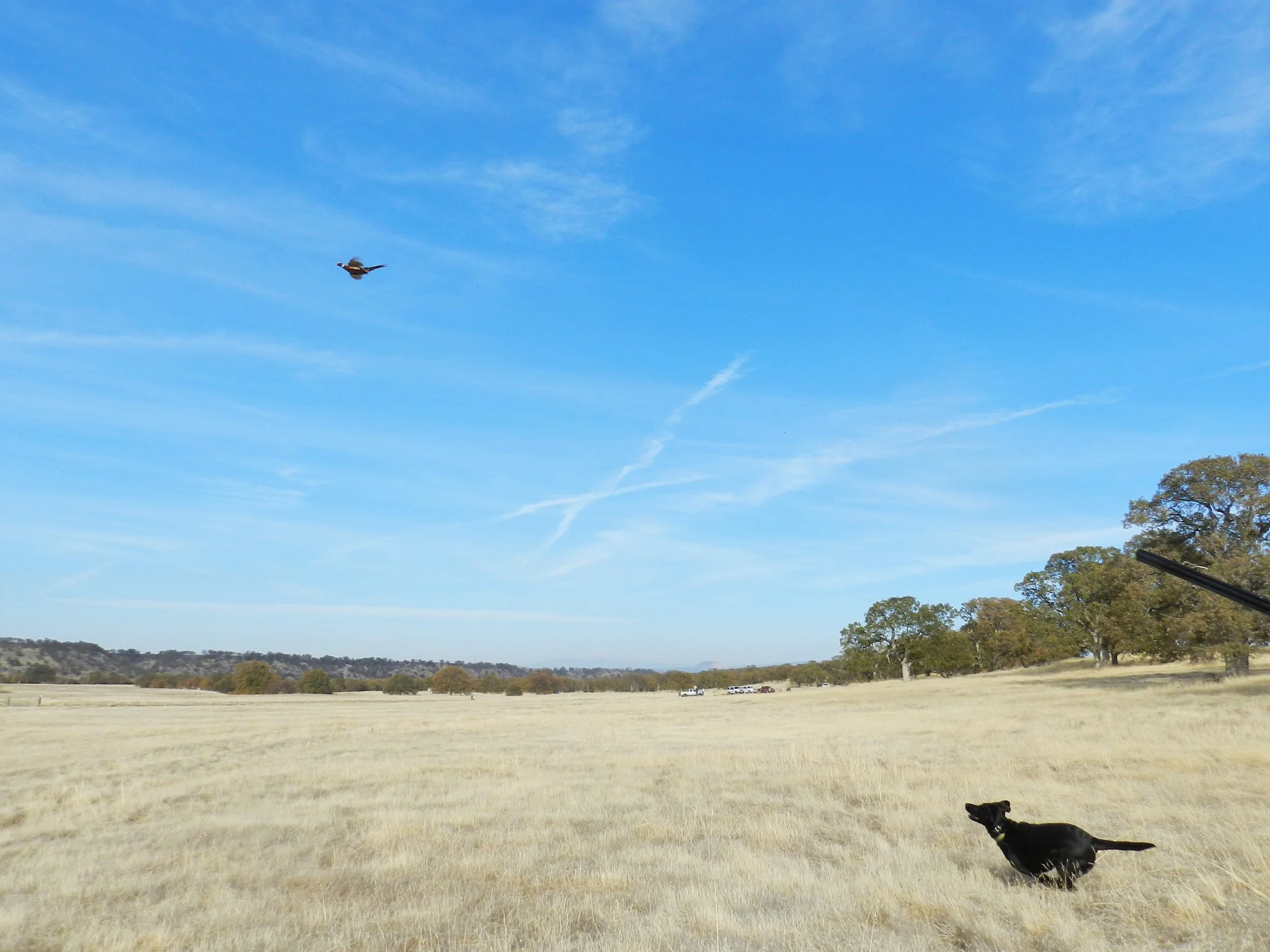
A Labrador pushes a rooster out of the grass on the Sacramento River Bend — BLM California / public domain — source
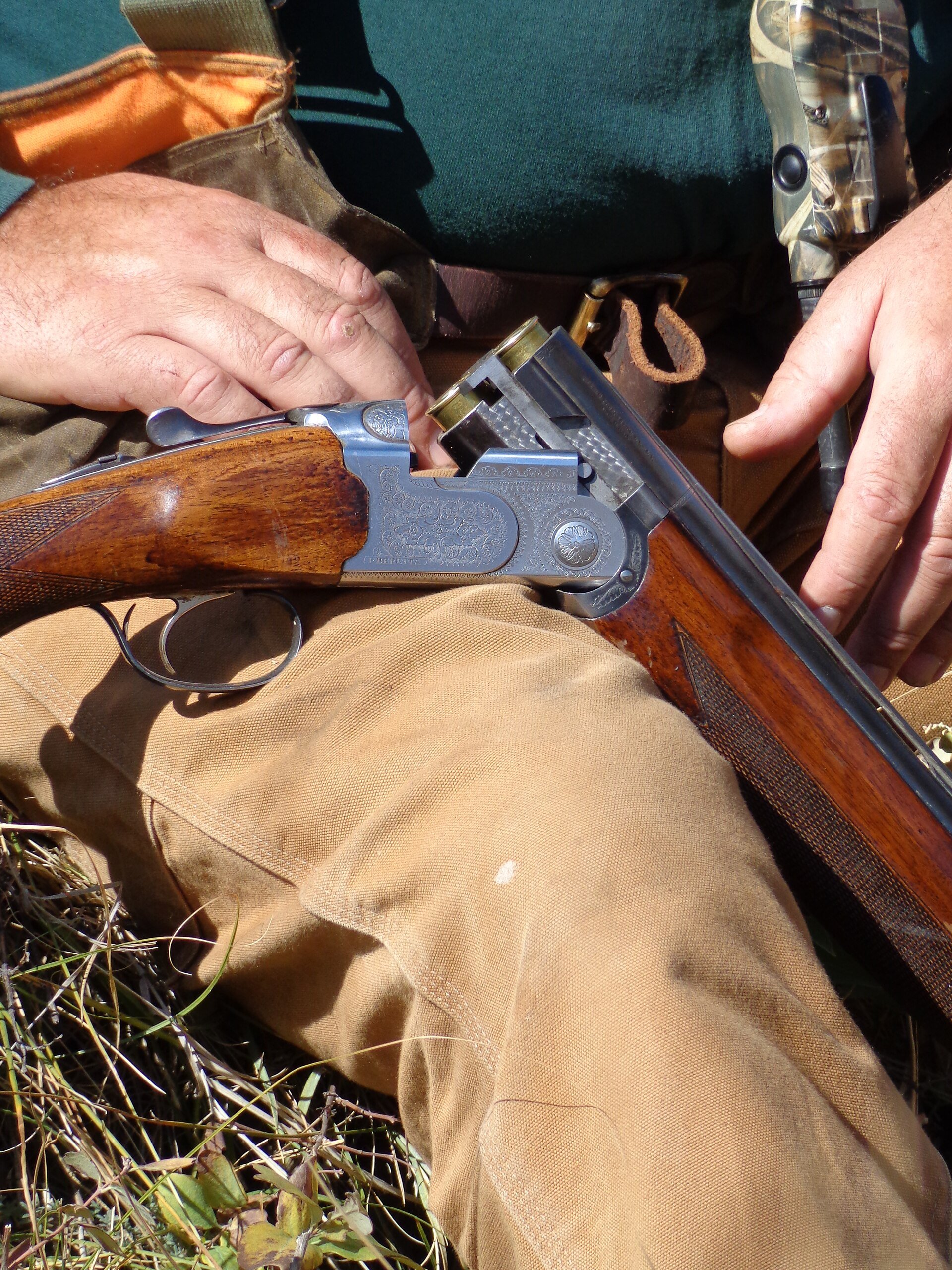
A break in the action, over-under open — BLM / public domain — source
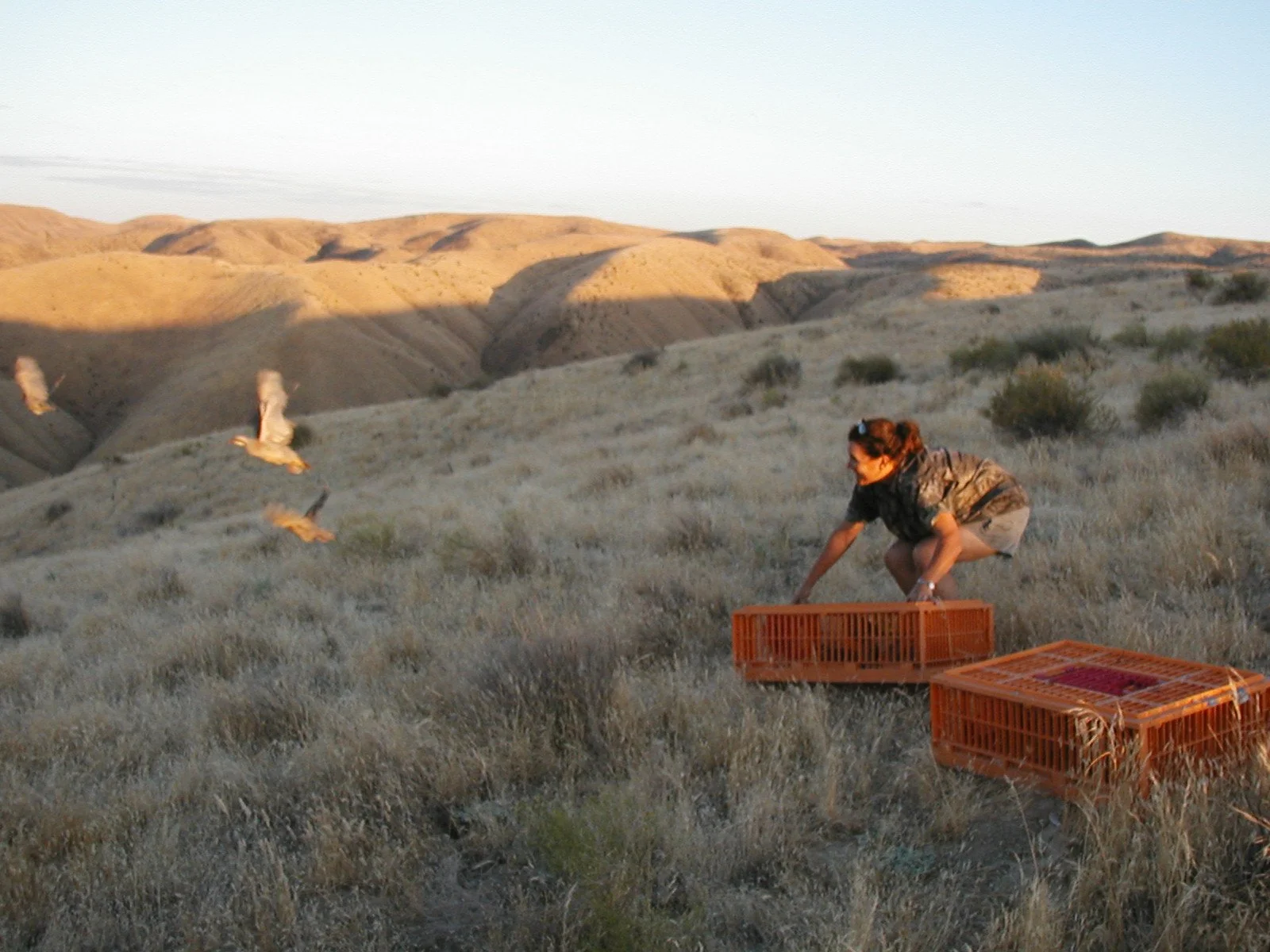
A CDFW crew turns chukar loose into sage country — California Department of Fish and Wildlife / CC BY 2.0 — source


