
Last-Minute Opener Checklist
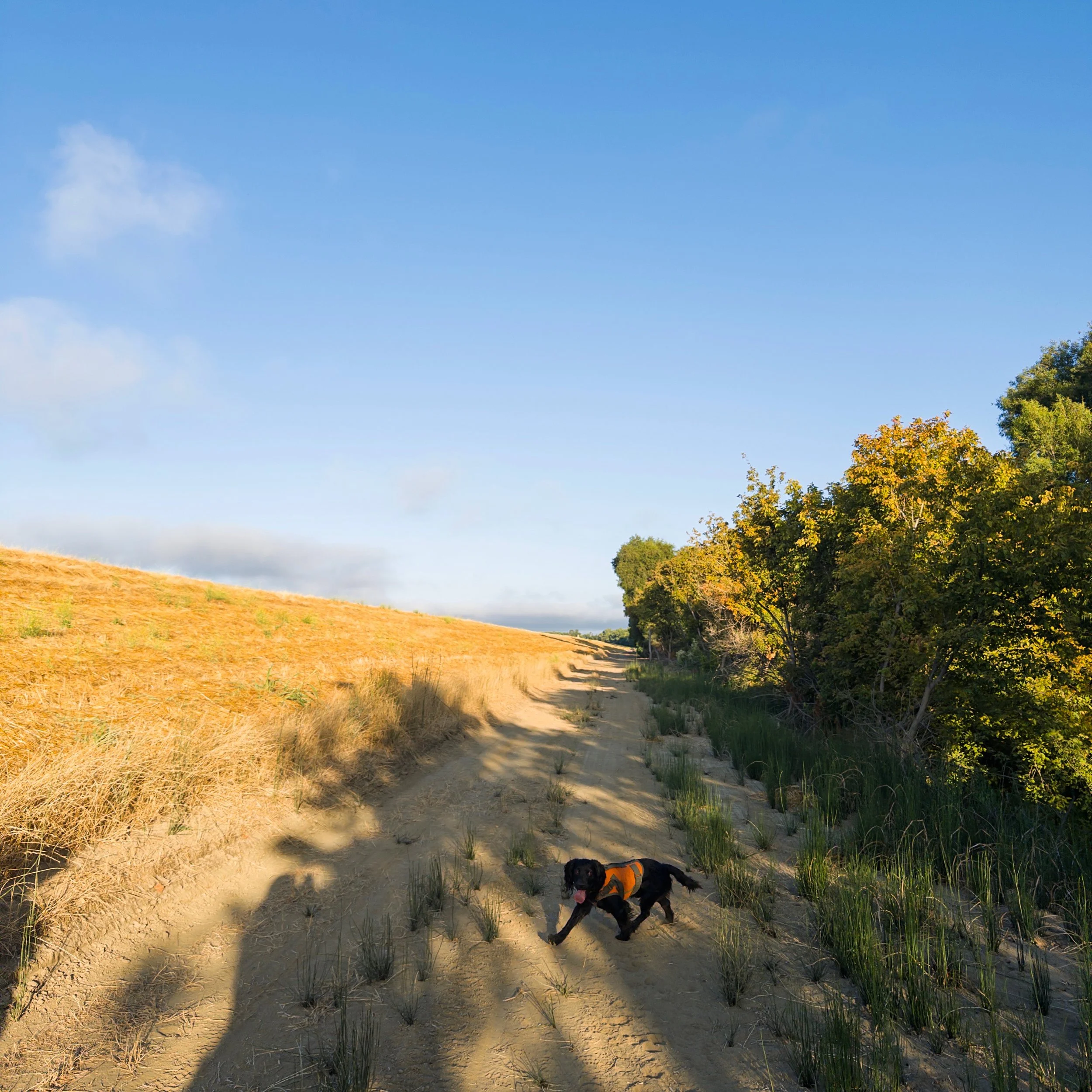
Dove hunting in the Sacramento Valley - photo by Peter Burnham
Nine days. That's the useful window — long enough to fix anything on this list, short enough that whatever you don't fix this week rides with you to the field. Between the two of us we grew up on a lot of September 1sts, Matt's in the Central Valley and Peter's in the Nevada valleys before Alan was ever a gleam in a breeder's eye, and the pattern held on both sides of the state line: the openers that went wrong went wrong at the kitchen table, days earlier, not at the field. So here's the checklist, scannable on a phone. Run it today.
Paperwork
Your 2026-27 hunting license is current. The license year rolled over July 1 — last season's license is expired, and this is the single most common tailgate discovery in September.
The upland game bird validation is on it. Required for dove in California, and it's the $10 that funds wild bird habitat statewide.
HIP validation is on it. Free, two minutes at CDFW licensing or any license agent, and required for every migratory bird hunter regardless of age.
You can produce all three in the field — paper in a zip bag is the no-battery answer while digital display rules settle.
Shells
Nonlead is secured — not "the store will have some," but boxes in your garage. Statewide law, no exceptions, and the shelves are thinnest exactly this week.
You have enough for a volume day. Fifteen birds and the honest shells-per-bird average say several boxes minimum; a case if you're hunting the second morning too.
If you're still deciding what to buy, the 25-yard nonlead rundown settles steel versus bismuth in one read.
Pattern Check
You've put at least three shells of your actual load through your actual choke at 25 and 35 yards. Twenty minutes at a bench, per the patterning protocol.
You know which choke goes in on the morning. Steel tightens roughly a choke's worth — the pattern board, not the tube's stamp, gets the vote.
The Field — and the Backup
Your primary field is picked and you've laid eyes on it within the past week. Crops change fast in late August; the drive-by method takes an evening.
You know what's actually planted and cut there — sunflower, safflower, and wheat each hunt differently, whether you're on a Yolo Bypass safflower edge or Imperial Valley wheat stubble.
You have a named backup field, because on opening morning your first choice may already hold six trucks at 5 a.m. The hunters who scramble at dawn are the ones who only scouted one spot.
Water, Ice, Cooler
A gallon per hunter for the morning is the floor; more if you're staying past ten.
Half your bottles go in the freezer opener eve — ice packs at dawn, cold water at the tailgate.
A cooler with real ice rides in the truck for the birds. Doves spoil fast at 95 degrees, and the birds deserve better than a hot game bag.
The Dog's Heat Plan
The plan exists before the morning does: dedicated dog water, reachable shade, and a quit time set by temperature, not by how many birds are still flying. The heat-safety piece is the protocol — read it this week, not in the field.
Peter's rule for Alan is the portable version: the dog's morning ends before yours does. A September retrieve is work; a September field offers a flushing dog no shade it didn't bring.
Snake awareness is part of the plan — canal banks and riprap edges are September rattlesnake country, so water breaks happen on bare ground you can see.
Regs, Re-Checked
Ten minutes with our 2026-27 regulations rundown, then verify against the CDFW booklet — CDFW is the authority, we're the reminder.
You know the numbers cold: 15-bird aggregate limit, the white-winged sub-limit if you're hunting the southeast zone, and collared-doves uncounted only when you can identify them before the shot.
Shooting hours are one-half hour before sunrise to sunset — and legal light is not the same as light you can honestly identify a bird in. The first five minutes belong to the birds.
Ears
Hearing protection is in the vest, not on the workbench. A good dove field on September 1 means hundreds of reports around you for three hours; it's the one piece of gear a volume day punishes you for forgetting, permanently.
Tell Someone
Someone who isn't in the truck knows which field you picked, which backup you named, and when you'll be out. September heat, remote canal roads, and spotty valley cell coverage make this the cheapest insurance on the list — one text, sent the night before.
That's the list. The honest caveat: a checklist gets you to the field squared away, and then the doves — who have not read it — do whatever they want, which is half of why we keep showing up. Nine days. The cornerstone has everything deeper; more of the craft coverage lives in the Skills archive. See you on the stubble edge.
Matt Gehrmann grew up hunting the Central Valley for pheasant, quail, and dove, and is based in the Bay Area. Read more → · Subscribe to the weekly digest →
Peter Burnham grew up in Nevada hunting chukar in the Sierras and dove in the valleys and hunts behind Alan (a three-year-old English cocker). Read more → · Subscribe to the weekly digest →