
Heat, Shade, and Water Strategy: Don't Cook Your Dog on Sept 1
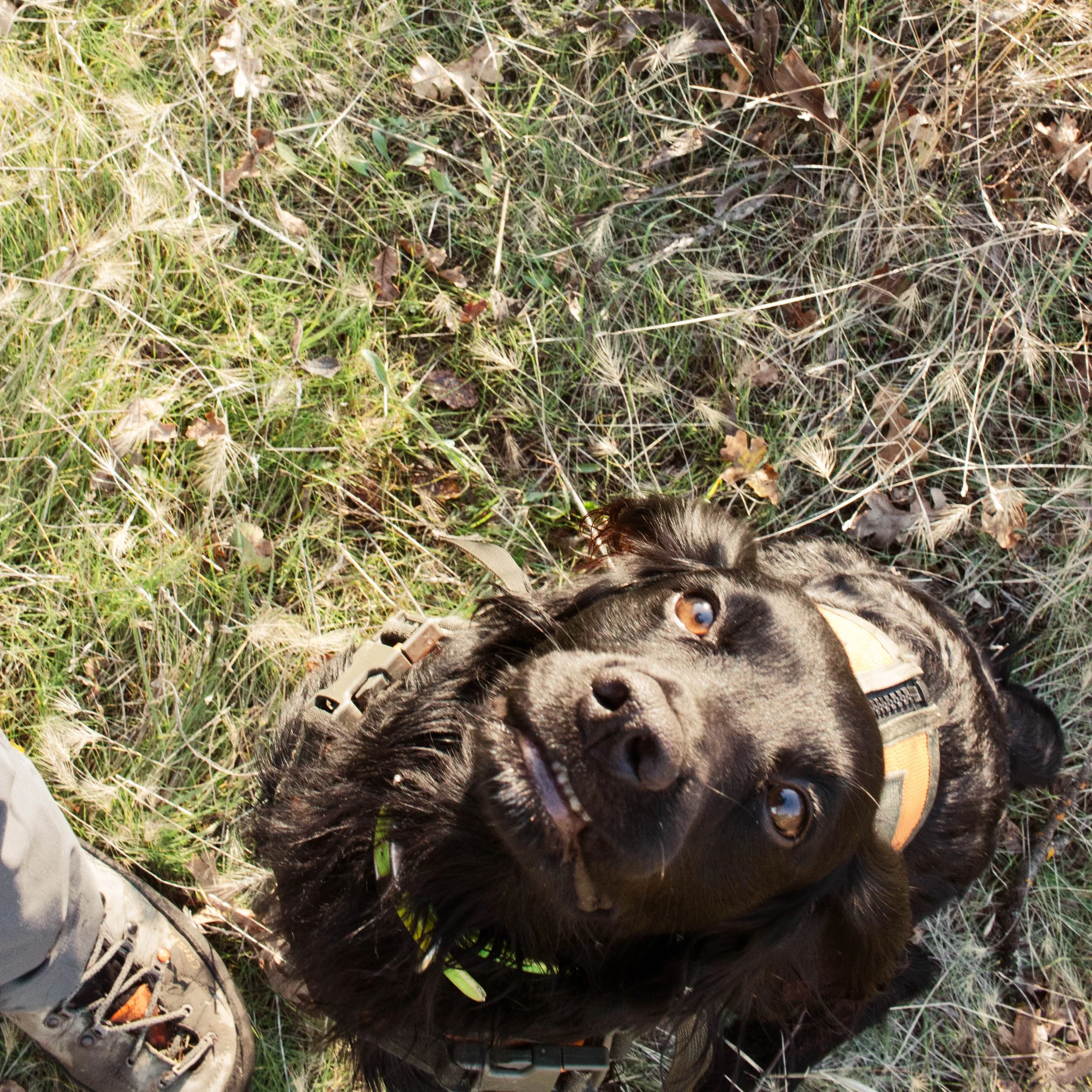
Alan early morning hunt - photo by Peter Burnham
Alan taught me the problem before any vet reference did. Two summers of hot-morning work — planted-bird sessions on the cut fields at Quail Point Hunting Preserve in the Sacramento Valley, warm-season scouting runs through the blue oak and chaparral of the Berryessa country — and the lesson is always the same one: a working cocker at 88 degrees looks exactly like a working cocker at 68 degrees, right up until he doesn't. The dog will not manage his own heat. He has never once voted to quit. That's my job, and on September 1 it's yours.
So this is the day-of protocol — the why is that four days from this piece publishing, the dove opener will put thousands of California dogs into a 90-degree stubble field for their first real work since winter. The conditioning rampran here two weeks ago — that's the preparation; this is the execution — and the heat-safety piece carries the full symptom-and-response protocol. This one is the plan you run between the tailgate dropping in the dark and the truck pointed home by mid-morning. One honest note on scope: my hot-weather craft with Alan is training-ground and scouting-ground lived; our first documented September dove opener together is still ahead, and I'll report it when it happens.
On Sept. 1, the Hunt Is the First Two Legal Hours
The hunt is the first two legal hours. Plan it that way from the start, not as a hopeful morning that heat cuts short. Legal light on September 1 comes half an hour before sunrise — call it just after 6 a.m. in the big valleys; confirm the table in the 2026-27 CDFW regulations — and the best flight of the day happens in that window anyway. Be parked early, be in position at legal light, and treat every minute before 8 a.m. as the real hunt. The doves and the dog agree on the schedule; only the hunter is ever tempted to renegotiate it.
Quit Time
Set the quit before you leave the truck: when the thermometer crosses your line or the clock hits 9, you're done — 10 at the outside on a mild morning, earlier on a hot one. Say the number out loud to whoever you're hunting with, because a limit-minus-three at 9:15 is exactly the situation the pre-committed quit time exists for. The birds you don't shoot on opening morning are still flying on September 2, in the cool, at first light.
Shade You Bring, Not Shade You Hope For
Scout your shade like you scout your field. A tree line or a tall ditch bank on the north-west edge of the field is position one — you shoot from shade and the dog stages in it. If the field doesn't offer it, bring it: a tailgate awning, a tarp off the truck bed, anything that puts real shadow over a dog-sized patch of ground with airflow through it. A dog crated in a closed truck bed is not shaded — it's ovened. Build the shade structure when you arrive, in the dark, before the first flight, because at 8:45 with a hot dog you will not want to be threading tarp poles.
The Water Math
Do the math out loud, per dog: a bowl offer every 20 to 30 minutes, and after every retrieve once the morning warms up — small amounts, often, beats a bucket at the end. For a morning of dove work that adds up to far more water than feels reasonable in the pre-dawn packing: I stage a gallon-plus for Alan alone for a single hot morning, split between the vest bottle in the field and the cooler jug at the truck, and I'd rather drive home with half of it than raid the humans' drinking water at 8:30. Cool water, not iced. And the bowl lives in the shade structure, so every drink doubles as a minute off the sun.
Wet-Belly Cooldowns
The between-flights move that buys the most: soak the belly. A cocker's undercarriage — belly, groin, armpits — is where the coat is thin and the blood runs close, and cool water applied there sheds heat far faster than water poured over the back, where a soaked topcoat can actually hold heat in. At the truck, Alan gets a wet-belly break whenever we're waiting on birds: bowl water by hand, or a dunked shirt held against the belly, airflow doing the rest. Thirty seconds of that beats ten minutes of him just lying in the shade panting.
Early Trouble
Know what the first signs look like before you need to — the heavy, wide-flagged pant that doesn't settle in shade, the dog that slows or sits down mid-field, the wobble, the glassy stare. I'm not going to restate the full protocol here because it deserves its own page and has one: the heat-safety piece walks the symptoms and the response minute by minute, and the honest rule is that if you're consulting it in the field, the hunt already ended. Read it this week, at home, twice.
Retrieve Economy
Here's the argument that separates a dove opener from every other day of a flushing dog's season: the retrieves are the only work, so spend them like money. Fewer, shorter retrieves — don't send the dog on birds you can see in the open twenty steps away; walk the last 20 yards yourself and let him take the falls in cover where his nose earns something yours can't. Drop birds into the same zone when you can choose the shot, instead of scattering falls across forty acres of hot stubble. Every sprint you don't spend at 8 a.m. is margin you still have at 9. Alan hates this policy. Alan doesn't get a vote.
The Go-Home Line
The named caveat, and the whole piece in one sentence: no strategy on this page makes midday safe, and none of it is a license to stretch the morning. Shade, water, and cooldowns buy margin inside the first two or three hours; they do not extend them. The go-home line is whichever comes first — the quit time, the thermometer, a dog whose recovery between retrieves is stretching out, or the plain gut read that the day has turned. When any of those trips, the shotgun goes in the case with exactly as much ceremony as a limit would get. There is always another morning; there is not always another dog like this one.
Full opener planning lives in the California dove cornerstone. See you out there — early.
Peter Burnham grew up in Nevada hunting chukar in the Sierras and dove in the valleys and hunts behind Alan (a three-year-old English cocker). Read more → · Subscribe to the weekly digest →