
Dog Conditioning for Early-September Heat
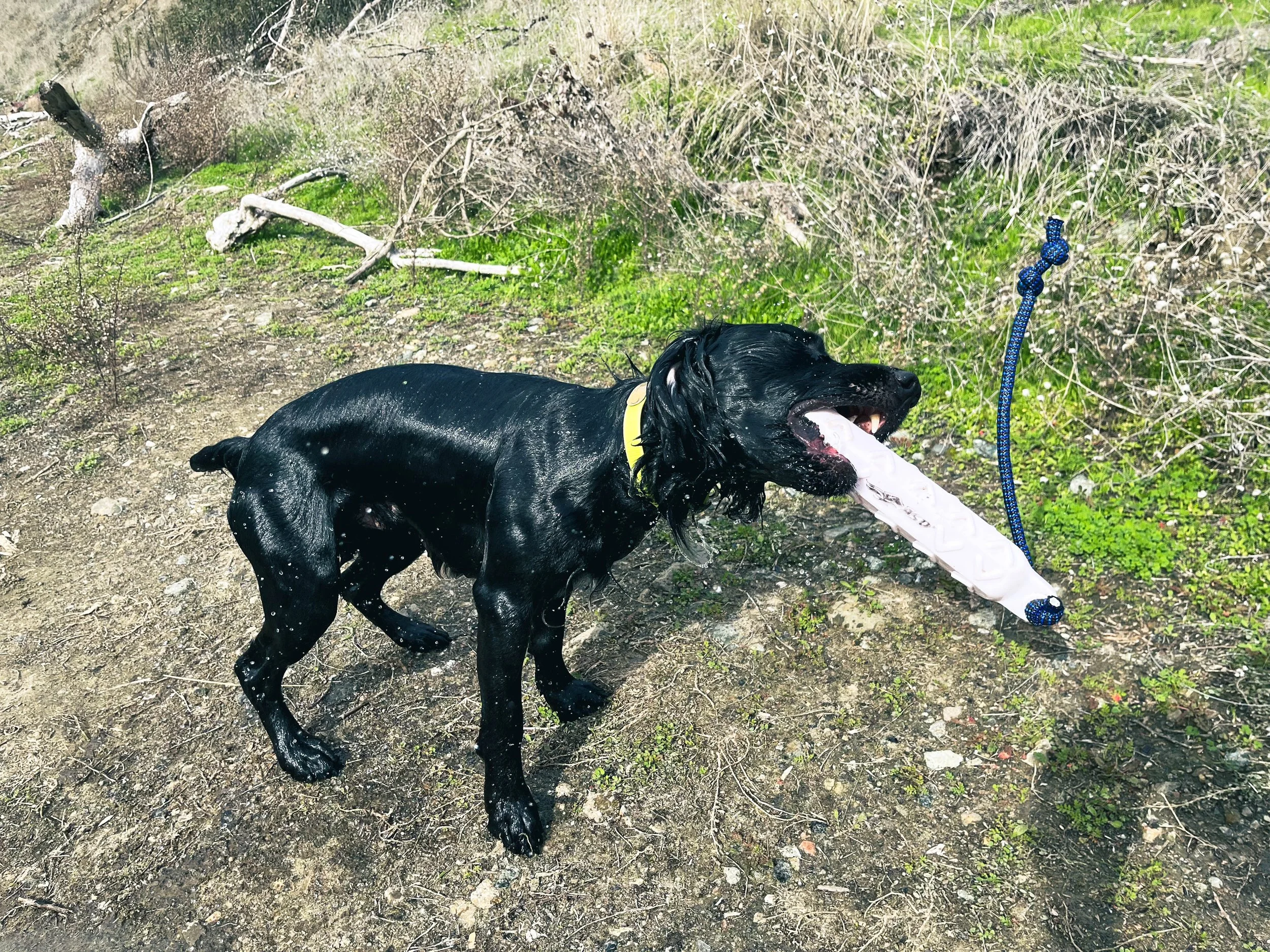
Alan cooling off after a summer hike - photo by Peter Burnham
Alan is four, and this is the third summer I've pointed him at a September 1 dove opener. The program has stopped changing much, which is usually the sign that something is either right or lazy — so this year I wrote it down properly, partly to check it against myself.
The reason it's worth publishing on August 14 rather than a week from now is arithmetic. The mourning dove (Zenaida macroura) opener is two and a half weeks out, and the veterinary sporting-dog references are consistent on the core fact: heat acclimation — the physiological adjustment to working in heat (expanded plasma volume, an earlier and more efficient panting response, better electrolyte retention) — builds over roughly ten to fourteen days of gradual exposure and fades within a few weeks of quitting. A dog that starts the ramp this weekend arrives on September 1 with a real margin. A dog that comes off the couch on August 31 doesn't. That's the why of this piece, and the whole of it.
One disclosure, per house rules: the program below is mine and Alan's, run three summers now in Sacramento Valley and Cache Creek heat. The physiology underneath it isn't — that's veterinary sourcing, cross-referenced and cited generically at the foot until we do a formal source pass. Where I've written a number, it's a number I've actually used, not one I've read.
Why the Dove Opener Is a Heat Event for a Dog
It's easy to file dove hunting as the gentle one — no chukar hills, no chamise. I grew up on the chukar side of that comparison in Nevada, and I filed it that way for years. But look at what September 1 actually asks of a dog. First light in the Sacramento Valley or the southern valleys comes in around 80 degrees and climbs fast; by mid-morning the cut stubble a downed dove falls into is holding 90-plus at dog height, radiating off bare dirt. Every retrieve is a sprint through cured annual grass — which is also peak foxtail country, a second hazard our foxtail-season piece covers in full — followed by a dead stop at the hunter's side, which is the worst possible cooling rhythm for a dog. And a good opener multiplies it: a 15-bird day can mean 15 sprints in rising heat for a dog that has mostly been walking on a leash since quail season closed.
That's the event you're conditioning for. Not distance. Heat, repeated short efforts, and hot ground.
The 2.5-Week Ramp
It's a ramp, not a boot camp, and every session lives inside the same window: first light, done early, home before the day turns. The shape of it:
Work the coolest hour. Sessions start at first light and end when the morning warms past the comfortable range — the same discipline the opener itself will demand. There is no version of this program that runs at 4 p.m., and the summer I tried one taught me why.
Build gradually. Roughly every-other-day work, starting short and easy in mid-August and lengthening toward opener week, mixing steady trotting work with short retrieving drills that mimic the sprint-and-stop rhythm of a dove field.
Train the actual job. Short marked retrieves on cut, dry ground — I use Quail Point Hunting Preserve in the Sacramento Valley, where Alan did his planted-bird work — rather than long cool-evening runs that build a different dog than the one September needs.
Back off before the opener. My last hard session lands a few days out. The final stretch is short, sharp, and easy; a dog can't get fitter in the last 72 hours, but it can absolutely arrive tired.
The veterinary references frame the same idea more clinically: gradual exposure, work-to-rest ratios that lengthen slowly, and a hard stop the moment the dog's recovery — panting that settles within a few minutes in shade — starts stretching out.
Water-Loading and the Cooler
Hydration for September 1 starts days before, not at the tailgate. My version of it is unglamorous: free access to water all week, wet food or water flavored with a little broth if he's being a reluctant drinker, and water offered every ten to fifteen minutes during work — small amounts, often, rather than a bucket at the end. On our Berryessa Snow Mountain scouting runs this spring, through the blue oak and chaparral above Cache Creek, I pulled Alan off a live scent line for a water break he had no interest whatsoever in taking. The dog doesn't get a vote on hydration, which is precisely why it works. The truck side of it is a cooler with more water than looks reasonable, a bowl that lives where the dog can see it, and — per the vet guidance — plain water as the default. Electrolyte products are a jury's-still-out add-on, not a substitute.
Pads, Weight, and the Scale
Two quieter pieces of the ramp. Pads first: a dog that has spent summer on lawn and sidewalk has soft feet, and September stubble over baked dirt is abrasive and hot. I build pad exposure the same way I build everything else — gradually, on progressively warmer and rougher ground, always with my own hand as the gauge. The back-of-the-hand test the references repeat: if you can't hold your hand on the ground comfortably for several seconds, the dog shouldn't be working on it.
Weight second: fat is insulation, and insulation is the last thing a September dog needs. My mid-August step is a plain one — hands on ribs, an honest look from above, and a weigh-in, with the vet as the arbiter if the answer isn't obvious. Two and a half weeks won't transform a heavy dog, but it will move one in the right direction, and knowing the dog's true baseline weight also gives you the number that matters if heat trouble ever sends you to a vet.
The Go/No-Go Morning
Here's the part I've come to think matters more than the conditioning itself: the decision is made against a number, not a mood. Before the season I set my thresholds — a first-light temperature above which the day gets shortened, and one above which Alan simply stays home — and opening morning I read the thermometer, not the dog's enthusiasm, because the dog's enthusiasm is a liar. A fit flushing dog will run itself into real trouble looking happy the whole way. What early trouble actually looks like, and what to do about it minute by minute, is its own protocol and already lives in our heat-safety piece — this article is the preparation; that one is the response. Read it before you need it.
What Conditioning Can't Buy
The named caveat, and it's the biggest one in the piece: no conditioning program makes noon safe on September 1. Acclimation buys margin at the edges — a dog that recovers faster at 8 a.m., pads that survive the stubble, a body that sheds heat a little better. It does not repeal the physics of a 95-degree afternoon in a shadeless field. Every hunter and vet I've learned this from lands in the same place, and three summers of doing it has moved me there too: the conditioned dog earns the first two or three hours of the day, and then everybody goes home. If your plan for the opener requires a dog working at midday, the ramp above isn't the fix. There isn't one.
Start this weekend. Two and a half weeks is enough — barely. And if you're building the rest of the opener plan, the California dove cornerstone is the page that holds it all together.
Peter Burnham grew up in Nevada hunting chukar in the Sierras and dove in the valleys and hunts behind Alan (a three-year-old English cocker). Read more → · Subscribe to the weekly digest →