
The Torn-Skin Fix: Pan-Fried California Quail with Quick Chimichurri
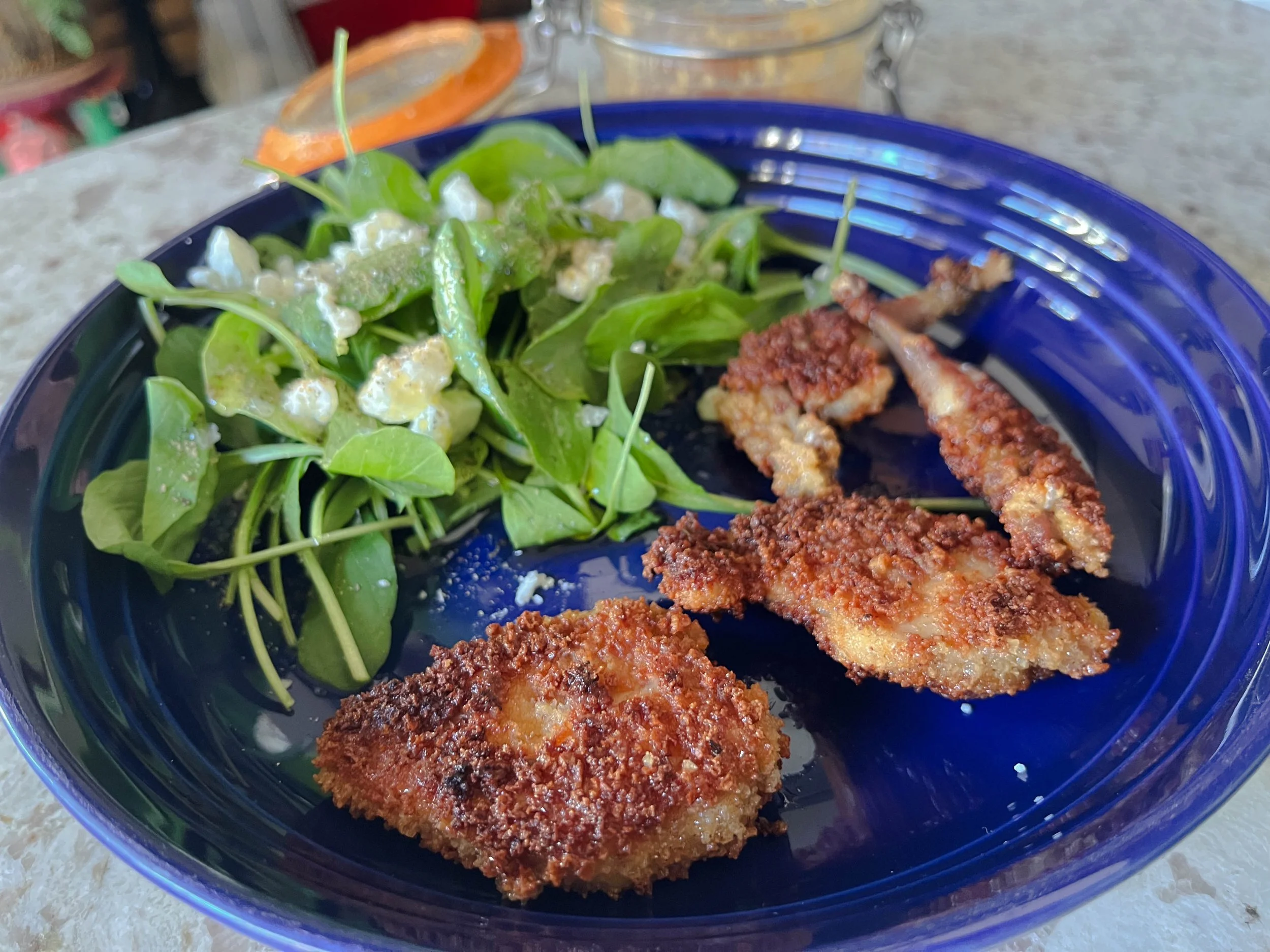
Quick work-from-home pan fried quail lunch - photo by Peter Burnham
The dog does everything right and the bird still comes back rough. That's upland hunting. A hard mark through manzanita, a tumble into rock, a retrieve that takes longer than it should — sometimes what lands in your hand isn't the clean double-breasted bird you'd planned to spatchcock and roast whole. The skin's torn, maybe gone entirely on one side, and roasting a bird with no skin just means dry meat and a wasted trip to the kitchen.
This is the recipe I reach for when that happens. It's not a consolation prize. It's become one of my favorite ways to eat California quail, skin or no skin.
Why This Matters in California
California quail are small birds — a limit doesn't yield much meat, and every bird matters. A hunter who's walked chamise flats in the Sacramento Valley or worked a covey out of Central Valley foothill brush knows that a torn-up bird isn't a bird you toss. The whole ethic of hunting your own protein falls apart if you let condition dictate whether a bird gets eaten well. Breasting the bird and pulling the legs solves the skin problem entirely — you're not relying on skin to protect the meat or crisp in the oven. Instead, a panko crust does that work for you, and a hot pan gets you dinner faster than a roast ever would.
The Method
Break the bird down. Remove the breast in two halves and pull both legs. Don't bother with the carcass beyond that — save it for stock if you're feeling ambitious, but it's not part of this dish.
Season and dredge. Salt and pepper the meat directly. Dredge each piece in beaten egg, then press into panko until evenly coated. Panko holds up better than standard breadcrumbs here — it stays crisp instead of going soggy in the short cook time.
Pan-fry in two stages. Legs and breasts cook at different rates, so don't crowd them together and hope for the best. Legs first: 2 to 3 minutes per side in a hot, well-oiled pan. Breasts need a bit longer: 3 to 4 minutes per side, since they're thicker and you want the panko golden without the meat drying out. Quail breast has almost no fat to protect it, so pull it the moment it firms up — carryover heat finishes the job.
Chimichurri, made while the oil heats. A big handful each of parsley and cilantro, 2 to 3 garlic cloves, a good pour of olive oil, a splash of red wine vinegar, the zest of a lemon, a spoonful of capers, salt, pepper, and a pinch of red pepper flakes. Chop it rough or pulse it in a food processor — either way, it should taste bright and a little sharp, built to cut through the richness of the fried crust.
Plate it simply. A handful of greens dressed in Samin Nosrat's House Dressing — the shallot vinaigrette from Salt, Fat, Acid, Heat — does exactly what a side salad should here: adds acid and freshness without competing with the quail. A torn piece of Acme sourdough on the side is non-negotiable. It's there to mop up whatever chimichurri didn't make it onto the plate.
Pro Tips
If only one side of a bird's skin is torn, you can sometimes save the intact breast half for a whole-bird treatment and only break down the damaged side. No rule says the whole bird has to go one route.
Panko clumps if your egg dredge is too thick — let excess egg drip off before you coat.
Don't walk away from the pan. Quail legs and breasts go from perfectly cooked to overdone in under a minute given how little mass they have.
Double the chimichurri. It holds well in the fridge for a few days and works on everything from grilled dove to a fried egg the next morning.
A torn-up bird isn't a wasted bird — it's just a different dinner. This one's become a regular in my kitchen, skin intact or not.
Internal links:
Peter Burnham grew up in Nevada hunting chukar in the Sierras and dove in the valleys and hunts behind Alan (a three-year-old English cocker). Read more → · Subscribe to the weekly digest →
