
What I Carry for Alan: A California Bird-Dog Kit That Actually Works
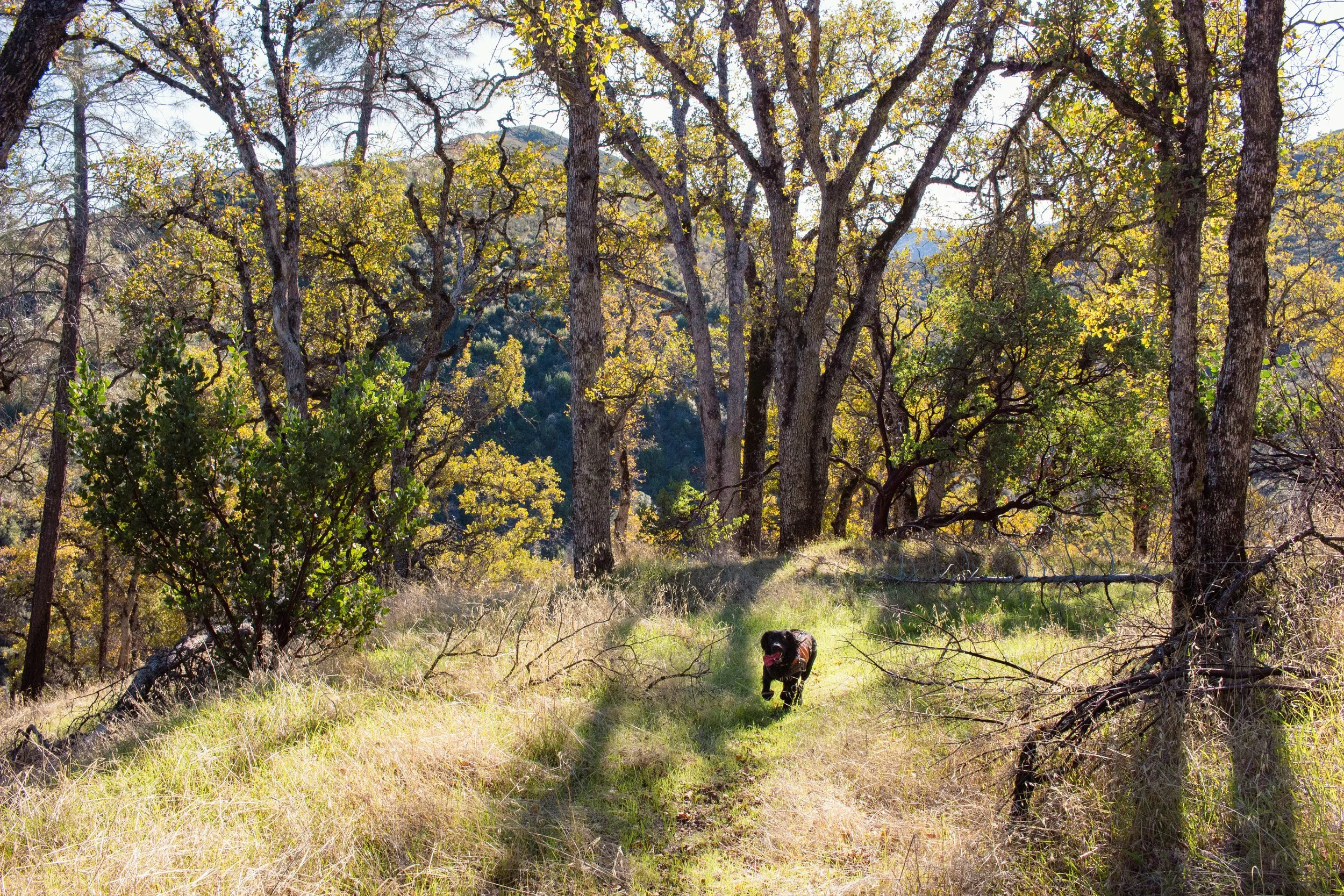
Alan on a December quail hunt - photo by Peter Burnham
Three seasons running an English cocker named Alan on California upland country has stripped my dog kit down to what actually earns the space it takes in the vest, the truck, or the camp. The first season I overpacked. The second season I underpacked, got bit by an oversight, and overcorrected. The third season started looking like a working kit. What follows is what's in it, what's not in it anymore, and why.
Cocker spaniel handlers will recognize the bias. Pointer handlers run different sizes and a few different items. The principles transfer; the specifics may not.
What I Carry in the Vest (On Body)
Things that have to be on me, not in the truck, every hunt:
Multi-tool with scissors. Foxtails are the California upland dog injury. Most need cutting out of fur, between toes, or under collars before they migrate. A Leatherman Micra (~$45 on Amazon, affiliate) lives in my left vest pocket every season. The scissors are the part that earn the spot; the rest is bonus.
Hemostats. Tweezers don't grip foxtails reliably. A pair of 5.5-inch curved hemostats ($12) does. Same pocket as the multi-tool.
A small first-aid pouch. Single-use vet wrap, a few gauze pads, quick clot, antibiotic ointment, eye-wash, a foxtail flashlight. Lives in the back vest pocket.
Tick Patrol tick remover - these live in the vest, in the truck, in the house, everywhere. Finding a tick on the sofa or in the bed is the number one complaint my partner has after a hunt. Avoid this at all costs.
Hydration gel packets (electrolytes). I’ve started running two K9 Power EnduRun packets per long hunt. Mixed with water and offered every 90 minutes when the dog is working hard. Jury is still out whether this actually helps. Just water is probably fine 95% of the time unless it’s over 75 degrees.
Honey — a fast-acting source of simple sugars (fructose and glucose) that absorbs immediately into a dog's bloodstream, used to prevent or reverse exertional hypoglycemia (dangerously low blood sugar from burned-through energy reserves) and the fatigue that comes with it.
Lead - you never know when you have to walk next to a road for 15 minutes or an injured dog needs to take it slow. I use a trial slip lead that weighs nothing.
Phone with vet's number programmed. Sounds obvious. Make sure you have the after-hours emergency line for the nearest vet to wherever you're hunting, not just your home vet. Sutter County, Modoc County, Inyo County all have different ones. I keep a note on my phone.
What's on the Dog
The on-dog kit is more contested. Different breeds, different needs. Mine:
Garmin Pro 550. The single most expensive piece of dog gear in my upland setup, and the piece I would replace first if it disappeared. It’s mostly a training and safety device for me. An e-collar with stim and tone isn’t essential for a flushing dog, but it keeps Alan safe when a coyote pops up and he is nose down looking for quail and I need a lightning fast recall. It earns its price maybe three times a season. Some folks run GPS collars which are essential for pointers, but Alan is trained to always be within shotgun range.
V2 Protective Upland Hunting Dog Vest from Field Armor is essential. After Alan took a grass seed to the ribcage that resulted in 2 surgeries and a $10k vet bill, a vest is always part of the program. It takes lots of the worry out of a strand of barbwire or a stick puncture that is always a risk in the field. I tried a few vests, and especailly for a small dog, this one fits better than any of the others and there’s no chaffing in the armpits even after a 10 mile run.
Boots — situational only, but they’re always in my vest should conditions change or Alan gets a pad injury. I don't use dog boots normally. Cocker pads handle most California cover without a problem. The exception is chukar country in late season when granite scree is sharp and we're walking ten miles. For that I use Ruffwear Grip Trex boots in size XXS. (~$80 a set on Amazon.) Train the dog to wear them at home before the hunt — they're useless if the dog won't accept them on day one of a trip. Pro tip - bring some ducktape. All boots fall off.
What's in the Truck
The truck kit is the heavier stuff that I can grab between hunts and stays in for training too:
Yeti Rambler 1 - 128oz jug that stays cool. They’re expensive but it’s great insurance to always be topped up. Fill it at every stop. Alan drinks almost a gallon on a hot hunt day. Add a stiff collapsible bowl (Ruffwear Quencher, ~$15).
Extra dog food, sealed. Three days more than the trip requires. Sealed in a Pelican-style box so rodents don't get into it at camp.
Treats — high-value. Freeze-dried liver or chicken hearts. Used sparingly for recall reinforcement and post-retrieve rewards. (~$15 a bag.)
Towel and shammy. For drying off after a creek crossing or a rain. Plus one for cleaning blood off the dog before the drive home.
A larger first-aid kit with more gauze, more vet wrap, an emergency wound clotting agent (QuikClot Pet ~$15), a thermometer (digital, lubed; rectal — yes, sorry), stapler, and a folded printout of the after-hours vet network for the regions I hunt.
What I Stopped Carrying
Worth saying out loud because the kit was bloated for two years:
Dog energy bars. Tried them, dog didn't care, and they're just expensive treats. Liver chunks work better.
Stapler in the vest. I’d rather wrap an injury and fix it at the truck.
Full sized multi-tool. They’re heavy and I mostly need scissors. The Leatherman Micra weighs nothing.
Sam Splint. I think about this one a bunch, but they’re bulky and I take my chances.
The Principle
A bird-dog kit should be sized for the worst-likely day you'll hunt, not the average day. The hottest dove opener, the steepest chukar canyon, the day a foxtail finds the gap in the kit. Build for that day; the easier days come along for the ride.
If you've found a piece of dog kit I'm missing or should drop, write to me at hello@californiaupland.com. The kit gets revised every season.
Related reading:
Reading Your Bird Dog: What Posture, Tail Set, and Cadence Tell You About a Covey (when published)
The Right Bird Dog for California Upland: A Breed Decision Framework
Bird Dog Field First-Aid for California Hunters (when published)
Affiliate disclosure: Some links above are affiliate links. We only recommend gear we actually carry. See our editorial standardsfor the full policy.
Peter Burnham grew up in Nevada hunting chukar in the Sierras and dove in the valleys and hunts behind Alan (a four-year-old English cocker). Read more → · Subscribe to the weekly digest →