
Picking a Puppy from a California Litter: Questions to Ask Before You Pay
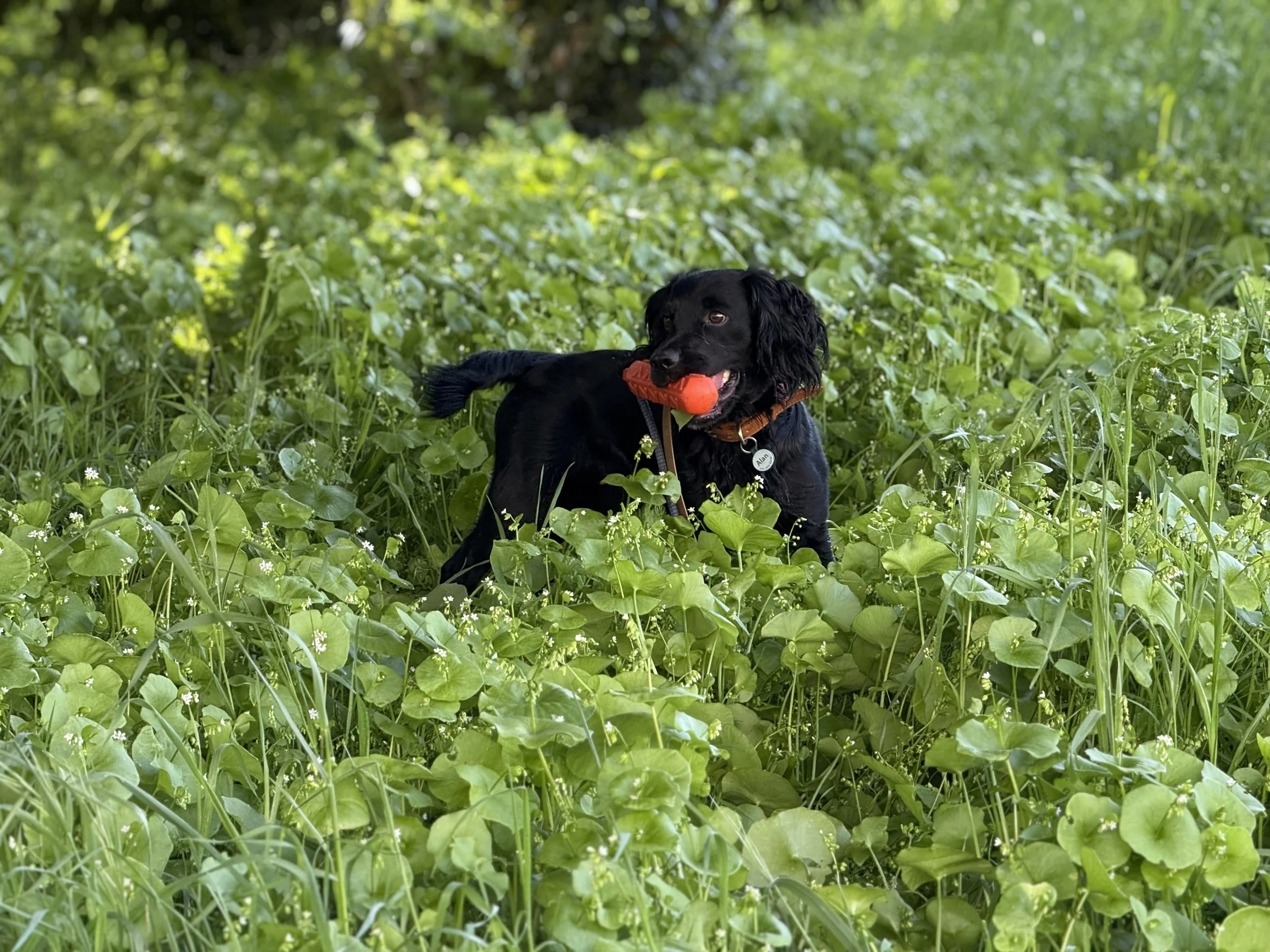
Alan training - Photo by Peter Burnham
By Matt Gehrmann
This is the second piece in my puppy arc. The decision framework was how I landed on a Brittany; this is how I'm picking the actual pup. Same disclosure as before — I haven't done this yet. I'm doing the homework in public so the next California hunter in the same position has something to compare notes against.
There's a lot of bird-dog buyer content on the internet that's either too vague to be useful ("ask the breeder good questions") or too specific to a single kennel to apply broadly. What follows is a synthesis of what three California breeders, the OFA database, the Project Upland buyer interviews, and Peter (who's been through this) have all said in roughly the same words. The questions that came up in every conversation.
Start with the Breeder, Not the Puppy
The single most important variable in how the next twelve years go is the breeder, not the litter. A great breeder produces a good pup nine times out of ten; a careless breeder produces a problem dog more often than that. Most of the questions below are about vetting the breeder. The pup picking comes last.
What you want from a breeder:
They ask you questions first. A good breeder interviews you before they accept a deposit. What's your training experience? What kind of hunting? What's your home like? If a breeder takes your money without asking, that's a red flag. They should care where the pup is going.
They breed for performance, not just looks. Show lines and field lines have diverged in most pointing and flushing breeds. You want the field line. Ask explicitly: what does the sire do, and what does the dam do? If both have been hunted, especially on wild birds, that's the answer you want.
They keep dogs in the house, not just kennels. Socialization in the first 8-12 weeks is the strongest predictor of how the dog will integrate into your home. Kennel-only-raised pups can struggle.
They're upfront about what the line is good at and not good at. Every breeder will tell you their dogs are the best. The good ones will also tell you what their dogs are not. If a breeder won't name a weakness, they don't know their own line well enough.
The Health Clearances You Have to Verify
There are four health clearances I'm asking for proof of, in writing, before any deposit. Different breeds have different specific risks, but every California hunter buying a working dog should see these:
1. OFA Hip Score (or PennHIP). Hip dysplasia is the single biggest preventable orthopedic problem in working bird dogs. The Orthopedic Foundation for Animals (OFA) certifies hips as Excellent, Good, Fair, Borderline, Mild, Moderate, or Severe. You want both sire and dam at Good or Excellent. PennHIP is a more sensitive alternative scoring system; a low Distraction Index (under 0.30) is the equivalent. Verify in the OFA database by the dog's full registered name.
2. OFA Elbow Score. Less famous than hips but equally important for a dog that's going to climb chukar country or push through chaparral. Want Normal on both parents.
3. Eye certification (CAER exam). Annual ophthalmologic exam by a board-certified veterinary ophthalmologist. Documented in the OFA database under "Eyes." Some breeds (English cockers in particular) carry hereditary retinal issues — verify clear.
4. Breed-specific genetic panels. Each breed has known genetic conditions worth testing for. English cockers: Familial Nephropathy (FN). German shorthaired pointers: von Willebrand disease, exercise-induced collapse. Brittanys: hereditary discoid lupus. Labs: exercise-induced collapse, progressive retinal atrophy. Ask the breeder which panel they run on each litter. The Embark, Wisdom, or Optigen tests are standard.
A breeder who can't produce these papers (or who hesitates) is not someone you want to buy from. There are enough good breeders in California that you don't need to take that risk.
What to Ask About the Litter Specifically
Once the breeder passes the vetting, the litter-specific questions:
How many pups are in the litter? (Average 6-8 for most breeds; very small or very large litters can mean issues.)
When were they born and when can they go home? (8 weeks is the floor; 9-10 weeks is better for socialization.)
Have they been exposed to gunfire, birds, water, novel surfaces? (Most good breeders are doing puppy enrichment by week 5; want to hear specifics.)
What's your refund / take-back policy? (Good breeders take their dogs back, period, for the life of the dog. If a breeder doesn't, they don't care enough.)
Have any pups been promised already? (Order of pick matters; first pick costs more in some kennels.)
Will you let me visit the litter before deciding? (Yes is the answer you want. No is a deal-breaker.)
What to Look For in Person
When you finally meet the litter — and you should, in person, even if it's a five-hour drive — here's what I'm planning to evaluate:
Health markers. Bright eyes (no discharge), pink gums, clean ears, no obvious skin issues. Puppy should feel solid in your hand, not lethargic, not frantic. A litter with one or two sick pups suggests something going on at the kennel.
Temperament. Watch them interact with each other. The one who can't be separated from the litter mates is not the dog for an upland hunter; you want a pup that can be away from the group and not melt down. The one who shoves to the front of every interaction may be too dominant. The middle-of-the-pack pup who comes when you sit down is often the sweet spot.
Sound sensitivity. Drop your keys on the kitchen floor. The pup that startles and stays scared is a problem. The pup that startles and recovers fast — orienting toward the sound, investigating — is the bird dog you want. This isn't a guarantee, but it's a signal.
Drive. Roll a tennis ball or a bird-wing tied to a string. You want a pup that engages — chases, picks up, brings back at least partway. A pup with zero interest at 7-8 weeks may grow out of it, but you're betting against the data.
Affinity. The pup that picks you — comes to your hand, follows you across the room, settles in your lap — is the pup to take home. There's no science to this, but I've heard the same line from every handler I've talked to. The dog picks you back.
The Money
Most reputable California breeders are pricing field-bred upland pups in the $2,000 to $4,500 range right now. Cocker spaniels and Labs tend to be lower; some Brittany and GSP lines run higher. Beyond the headline number, expect:
$500 to $1,000 deposit at breeding (often before pups are conceived)
Balance due at 8 weeks
Initial vet fees, microchip, first round of shots usually included
Some breeders provide a starter kit (collar, blanket from the whelping box, food they're eating)
Add another $500 to $1,500 in the first two months for vet visits, crate, gear, training tools, and food. Plan on $1,000 to $2,000 a year ongoing for food, vet, supplies, plus the occasional training class or trainer's help.
A field-bred bird dog is a 10-to-14-year investment. The $3,000 you pay up front is the smallest line item in the total cost.
My Timeline
I'm targeting a spring 2027 pup. The reasoning: a spring litter gives me April or May to bring the pup home, which lines up the critical early socialization window with the warm long-daylight months — outdoor time, water exposure, neighborhood walks, off-leash play with friend's dogs. Summer for the obedience and recall foundation. Late summer and early fall for the first bird exposure (planted-bird sessions starting around five or six months old). And the goal of having a fundamentals-trained dog ready for his first wild-bird exposure in the 2027-28 season.
A fall 2026 pup would do that work in the wet, dark, cold months. A spring 2027 pup gets the better runway.
That means picking the breeder this fall, placing a deposit by winter, and verifying breeding timing for the litter I want. Breeders with working-line Brittanys (the breed I've committed to — see The Right Bird Dog for California Upland for how I got there) often breed once a year and have wait lists. The longer wait is part of why I'm starting this conversation now rather than at picked-up-the-pup time.
I'll write the breeder-visit piece when I do it, and the puppy-pickup piece when the pup comes home. If you've been through this and want to push back on any of the above — particularly the health-clearance list, which I want to get exactly right — write to me at hello@californiaupland.com.
Related reading:
The Right Bird Dog for California Upland: A Breed Decision Framework
What I Carry for Alan: A California Bird-Dog Kit That Actually Works (when published)
Get the weekly digest. One email each Sunday with the week's pieces, plus the California Upland Season Dates & Limits Cheatsheet PDF as a free download for new subscribers. Subscribe →
Matt Gehrmann grew up hunting the Central Valley for pheasant, quail, and dove, and is based in the Bay Area. Read more → · Subscribe to the weekly digest →