
Why Upland Hunters Should Be Rooting for California's Conservation Groups
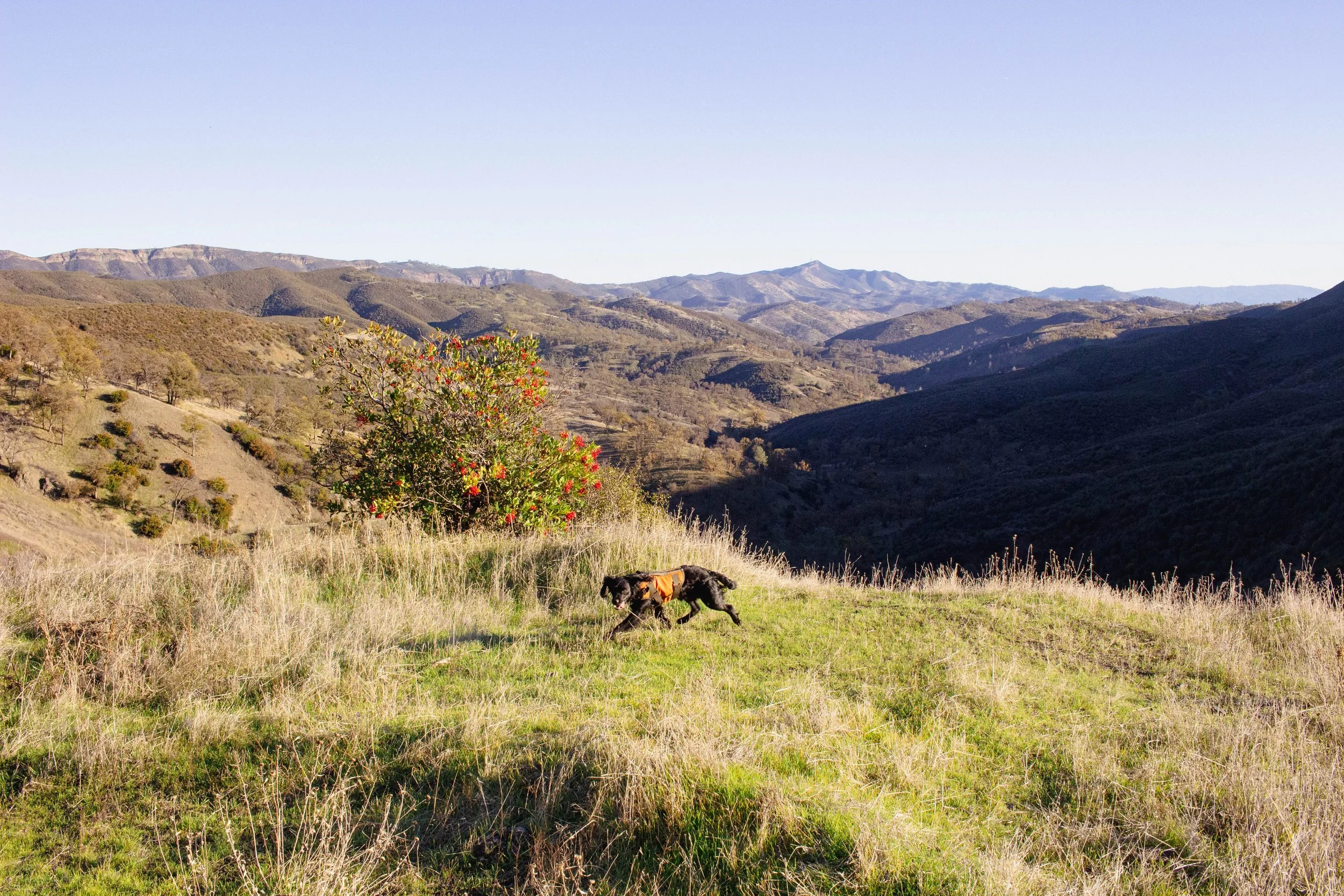
Alan hunting the Snow Mountain National Monument - photo by Peter Burnham
A covey of California quail doesn't care who holds the deed. It cares about oak canopy overhead, dense brush at ground level, and water within a quarter mile. Those are the exact ingredients a handful of California conservation groups are working, ranch by ranch and preserve by preserve, to keep on the map.
None of these organizations exist to serve hunters specifically. But upland birds don't read mission statements — they live in exactly the terrain these groups keep protecting.
Working Land, Kept Working
The California Rangeland Trust has permanently protected more than 400,000 acres of working ranchland statewide through conservation easements, land that stays in grazing rather than getting carved into subdivisions. That distinction matters more than it sounds: managed grassland, oak savannah, and stock ponds are quail and chukar habitat, and a ranch that stays a ranch keeps that structure intact in a way pavement never allows.
Grassland and Oak Woodland, Preserved
The Center for Natural Lands Management holds preserves across the state built around exactly this habitat mosaic — Cholame Ranch in Central California protects annual grassland, chamise chaparral, and blue oak woodland; Panoche Valley Preserve does the same across San Benito and Fresno counties. Some CNLM preserves have public trails; many don't, since the land's first job is protecting the species already living there.
Hunters Doing the Work Themselves
It's also worth naming the groups made up of hunters. California's Quail Forever and Pheasants Forever chapters — now more than a dozen statewide, from the Central Coast to the Sacramento Valley — run habitat restoration projects, work directly with landowners and agencies, and put on youth hunts, all explicitly in service of upland bird populations and the tradition of hunting them.
A Note on Alignment
Not every group above shares a hunter's every position, and not all of them provide huntable access to the land they protect. That's fine. Their job is stewardship, not access, and the two aren't the same thing. California is a big, multi-use state, and the birds, the land, and the people who care about both are better served by hunters and conservation groups recognizing they're pulling toward the same outcome, even when they don't agree on everything along the way.
Peter Burnham grew up in Nevada hunting chukar in the Sierras and dove in the valleys and hunts behind Alan (a three-year-old English cocker). Read more → · Subscribe to the weekly digest →
