
What Changes in a Sacramento Valley Dove Field After Opening Weekend
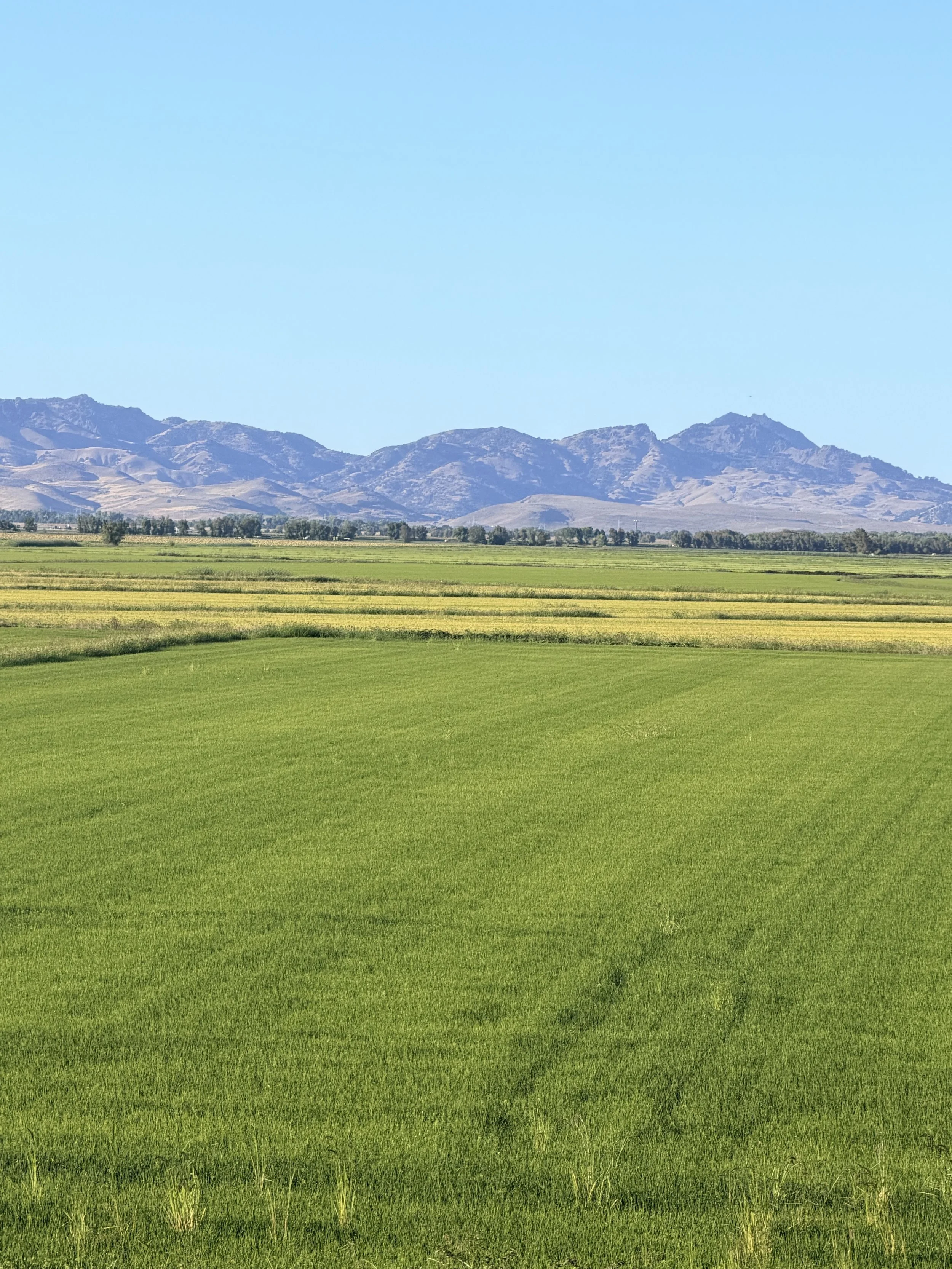
Most people scout a dove field once. They drive it in August, find the cut safflower with the ditch running along the edge, note the fence row, and then they hunt that field on Sept. 1 and again on the second Saturday and wonder why the second one was worse.
The reason is that they hunted the same map twice. The field is a moving object in early September, and it moves fastest in exactly the week most hunters stop paying attention to it. Four things shift, they shift on different clocks, and the difference between a good second weekend and a bad one is usually just having tracked which.
Two notes before the list. The first is that all four mechanisms run the same way in the San Joaquin and in the Imperial Valley — the crops and the calendar differ, the logic does not — so this is not only a Sacramento Valley piece even though the examples are. The second is that it is not only a first-split piece: everything here applies again, harder, in the November 14 to December 28 season, when the harvest calendar has moved on and the water has stopped being an irrigation decision.
We should also be upfront about the register: this is a structural piece, built on how the system behaves rather than on this season's specific fields. I grew up hunting this ground and have watched most of what follows happen, but I have not been out on it in September of 2026, so nothing below is a report on current conditions. It is a map of what moves.
Pressure Moves First, and It Moves the Birds
The first weekend is the hardest hunting pressure a California dove population sees all year, and it does not disperse birds so much as re-sort them. The published work on hunting pressure and dove field use is fairly consistent on the pattern: birds do not abandon a region, they abandon particular fields, and they shift toward whatever nearby ground is not being shot.
In the Sacramento Valley, "not being shot" almost always means private. A public unit that held birds beautifully on Aug. 30 can be thin by Sept. 6 while a private half-section a mile away is thick with them — not because the private field is better habitat, but because it is quiet. That is a frustrating dynamic for a public-land hunter and it is worth naming honestly rather than pretending scouting can defeat it.
What can be worked with is the second-order effect: flight timing. Accounts and the pressure literature both describe birds pushed off a heavily shot field arriving at the remaining ones later and lower, and moving more at last light than at first. A field that produced at 6:40 in the morning on opening day may produce at 6:40 in the evening a week later. The hunters we know who still shoot birds on the 13th are disproportionately evening hunters.
Water Becomes the Constant
Feed is abundant in the valley in September. Water is not evenly distributed, and it is the thing being actively managed by somebody with a pump.
This is the part of the picture that changes on a human schedule rather than a biological one. An irrigator floods a check on the 4th and by the 6th every dove within a mile knows about it. A drain that was running in August goes dry when the water order ends. Rice fields hold water for reasons that have nothing to do with birds and everything to do with the harvest calendar, and when they draw down, the exposed edges become the best dove ground in the county for about four days.
The practical consequence is that a drive-by in the second week is worth more than the one done in August — the May drive-by methodapplies just as well in the middle of the season, and the accounts we trust most describe re-driving the same loop every few days rather than scouting once.
New Fields Come Online
The third thing that changes is the supply of bare dirt.
Safflower is largely done before the opener. Milo and the later grain ground come off through the first half of September. Rice harvest ramps in mid-September and keeps going, and while a rice field is not a classic dove field, the levee edges and the spilled grain around a harvested check absolutely are. Every week of the season, fields that did not exist as feed on Sept. 1 appear.
That is the optimistic half of this piece. Pressure is subtracting fields from your list and the harvest calendar is adding them, and by the second weekend the additions are often better than what you lost — newly cut ground with fresh waste grain and nobody standing in it yet.
The Birds Themselves Change
Two shifts here, both worth knowing and neither worth over-claiming.
The first is age composition. Early-season dove harvest in the West skews heavily toward young-of-year birds, which are the ones that decoy poorly, fly erratically, and get shot at the most. As the first split runs, the naive birds thin out of the population disproportionately. Birds in the second week are, on average, more experienced birds — which is part of why the shooting gets harder in a way people usually attribute to pressure alone.
The second is turnover. The doves in a Sacramento Valley field on Sept. 1 are substantially local birds. Over the course of September, local birds begin moving south and northern migrants begin moving through, and the population in any given field is partly replaced. That turnover is consistent with the shape of the season — a fifteen-day first split, a two-month closure, a November reopening — though we would not claim it is the whole explanation, since season structure is set inside federal frameworks and is an allocation decision as much as a biological one. The USFWS mourning dove population status reports are where the numbers live, and we would rather point at them than paraphrase them badly.
The Named Caveat
Everything above is a description of tendencies, not a forecast. A cold front, a wind shift, or one irrigator's decision can override all four mechanisms in a day. We have watched a field go from empty to excellent overnight for no reason anybody standing in it could identify.
So the use of this piece is not as a prediction engine. It is as a list of the four things worth checking before the second weekend, in place of the far more common approach of checking nothing and hunting the August memory.
Then It Closes
The last thing that changes about a Sacramento Valley dove field in September is that on the 15th you are no longer allowed to hunt it. The first split runs Sept. 1 through 15 for the 2026-27 season, and the second runs Nov. 14 through Dec. 28 — the regulations piece has the validations and limits, and CDFW's current table is the authority.
Fifteen days is not very many. It is enough to hunt a field twice and learn nothing, or to hunt it five times and learn the whole system. The dove cornerstone and our field-crop decoder are the rest of the file.
Matt Gehrmann grew up hunting the Central Valley for pheasant, quail, and dove, and is based in the Bay Area. Read more → · Subscribe to the weekly digest →