Hunting California Quail Without a Dog: First Light to the Cooler
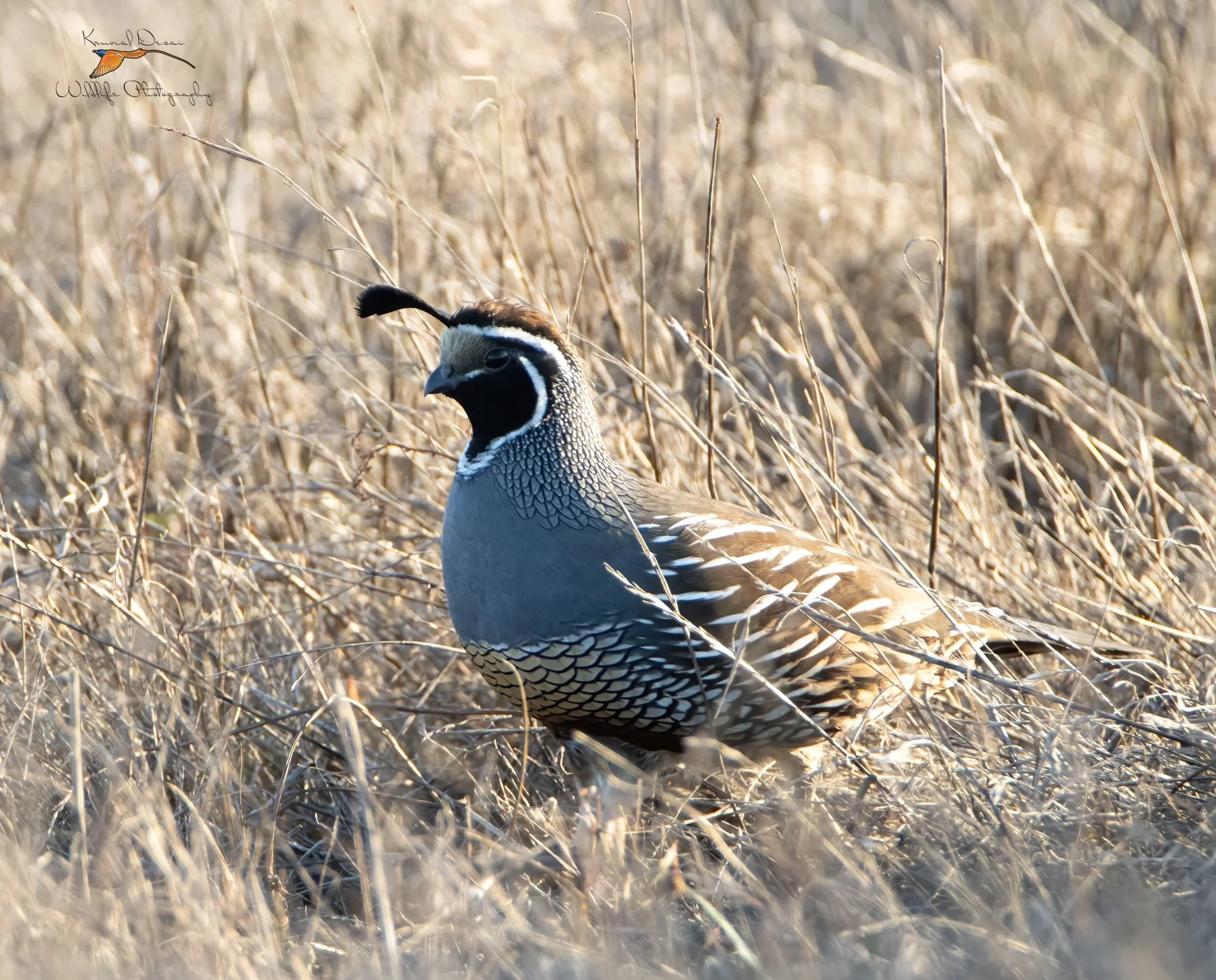
A male California quail in dry October grass, the kind of open edge a first morning starts on. Photo: Krunal Desai / CC BY-SA 4.0 — source

My Brittany comes home in the spring. Until then I hunt California quail without a dog, on foot, which is how a lot of first seasons in this state begin. The Instagram messages Peter gets say it a dozen ways: the license is bought, the upland validation is on it, the vest and the shells are in the closet, and nobody has shown you what the first morning looks like. This is that morning.
A dog finds the birds you would walk past and finds the birds you hit. Without one you do both jobs with your ears, your feet, and your eyes, and now and then you will lose a bird a dog would have brought back. Hunting without one is also how you learn the bird: a season of walking up coveys, the fall flocks California quail travel in, teaches you where they feed, where they hide, and how they leave.
The Night Before
The ground is legal. A map layer shows you whose ground it is (BLM, national forest, monument, state wildlife area), not what that agency allows on it. Our public land designations guide walks through the two-minute check.
The paperwork is on you. A hunting license with the upland game bird validation, and nonlead shells, which California requires for all hunting with a firearm. Most of the state opened for California quail on Saturday, Oct. 17, and runs through Jan. 31; Zone Q2 (Marin, Sonoma, Napa, Solano, Lake, and Mendocino counties) opened Sept. 26 (dates by zone). The daily bag is 10, possession 30, and shooting hours run from half an hour before sunrise to sunset.
Someone knows the plan. With a partner, agree how you will walk. Alone, tell someone where you parked and when you will be back.
Wear a blaze orange hat; on public ground in October, assume someone else is in the brush. You will want the hat later for a second reason.
Listen Before You Walk
Be at the edge of the cover at first light and stand still for ten minutes. California quail feed along open edges for the first two hours of daylight and talk while they do it, and the three-note assembly call, chi-CA-go, carries a long way on a still morning. Hear it, mark the direction and how far, and work toward it along the edge. If ten minutes pass in silence, move and listen again. By mid-morning coveys drift into the thickest cover and go quiet until they feed again late in the afternoon, so spend the first two hours well.
The cover that holds quail is brush against open ground. In the oak-and-chamise country of Berryessa Snow Mountain National Monument, it is the line where chamise meets grass. On the brushy creek bottoms at the edge of the Central Valley, where I learned this bird, it is the seam between the tangle and the field. In coastal sage scrub, from the Central Coast south, it is where sage and buckwheat open onto grass.
How to Walk Up California Quail Without a Dog
Expect them to run. California quail would rather run than fly. A fast pip-pip-pip ahead of you is the alarm call: the birds are on foot and leaving. Close the distance at a fast walk, safety on and even with your partner, to put them up closer than they would choose, instead of following at a stroll until they flush a hundred yards out.
Walk the edge, not the middle. Birds pushed into the heart of heavy brush run out the far side and flush out of range. With two of you, walk abreast and in sight of each other, one on the edge and one out in the open, and never let one get ahead.
Zigzag, and stop. Some birds do hold, mostly singles and birds pinned in thick cover, and if you walk a straight line you pass them; they flush behind you. Weave along the edge, and every so often stand still for a slow count of ten. A bird that sat tight while you moved often can't stand the silence.
Agree on the shooting before anything flies. On foot, unlike a blind or a dove field, the other shotgun is moving beside you. Safety on until the bird is up. Take birds on your own side and straight ahead, never across your partner's. Call "bird" on every flush, and shoot only with sky under the bird. The birds you should take are 15 to 25 yards out, so an open choke, improved cylinder or light modified, with steel 7s or bismuth 7½s is the right setup.
The First Flush, and the Next Twenty Minutes
When the covey goes, it may go all at once or in bunches over a few seconds, and the instinct is to shoot at all of it. Pick one bird, shoot, and watch it all the way to the ground before you think about a second. A bird you marked is a bird you will usually find.
Then watch the rest. The covey scatters into the nearest heavy cover, often a hundred yards or so away, in small groups and singles. Get your bird first. After that, the next twenty minutes are often the best shooting of the morning: singles hold tighter than the covey did, and they start calling to regroup. Walk in slowly and stop often.
Finding a Quail You Hit
Pick a landmark at the fall — a shrub that stands out, a rock, a fence post — and keep your eyes on it.
Walk straight to it without looking away. The moment you look away, the spot moves.
Drop your hat where you think the bird hit, open your shotgun, and search outward from the hat in a tight spiral, looking under the brush rather than over it. Feathers on the ground confirm the spot. Look before you reach: rattlesnakes are still out on warm October days.
Nothing there? Go back to where you shot from and replay the shot. Then assume the bird ran away from you, usually downhill or along the easiest path through the cover, and search that way.
Give it time: fifteen minutes before you widen the search, and don't quit on a bird you know you hit in under half an hour.
Getting Birds Home
Get birds out of the sun and into a cooler in the car, and leave a fully feathered wing or the head on every bird until it is home (14 CCR § 251.7(b)). Quail cook fast, and our torn-skin fix handles the most common kitchen problem.
The Second Weekend
The California valley quail guide covers the country and the year, and the e-scouting shortlist shows how to choose the next piece of ground. CDFW's advanced hunter education clinics, which include upland, are on our hunting resources page, and everything we have on the bird is on the quail page.
A season on foot teaches you where quail live. That part, the dog can't do for you.
Matt Gehrmann grew up hunting the Central Valley for pheasant, quail, and dove, and is based in the Bay Area. Read more → · Subscribe to the weekly digest →