
Reading May Greenup: What Bunchgrass Tells You About Fall Valley Quail in NorCal
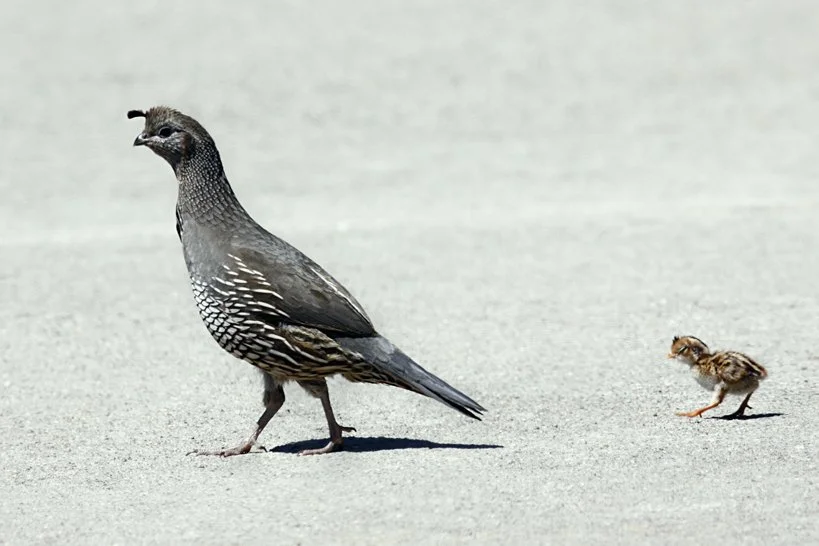
Photo: Alan Schmierer / CC0 1.0 — source

If you wait until August to scout valley quail, you are reading the test after the bell has rung. May greenup is the forecast. The hens are on nests right now — in some of the warmer bottoms of the Sacramento Valley, first broods are already running — and the cover that holds those broods through their first six weeks of life is the cover you can read with your boots in the next three weekends. May greenup valley quail scouting is less about finding birds and more about reading whether the country can produce them.
Why May, Not August
A valley quail (Callipepla californica) hen on the nest needs roughly thirty percent residual cover, fresh forb growth within twenty yards, and an insect-rich understory once chicks hatch. The whole sequence runs on what the rains gave you in February, March, and April. By August the annual grasses have cured, the forbs are stems, and the chicks that survived have already survived. Scouting in August tells you whether you missed. Scouting in May tells you whether the country can hold a fall covey at all.
CDFW's annual upland surveys consistently track quail production against spring rainfall. The 2026 water year ran wet — the Coast Range got soaked through March — which means the May read is going to matter a lot. Wet years produce. Dry years suppress. The hinge is what cover that water has built by Memorial Day.
Reading Native Bunchgrass vs. Cheatgrass
Walk a hundred yards across any NorCal foothill or Coast Range BLM tract in May and the ground will tell you what you need to know. Native perennial bunchgrasses — purple needlegrass (Stipa pulchra), blue wildrye, Idaho fescue — stand in discrete clumps with bare ground or forbs between them. That structure is gold for quail: hens nest at the base of a bunch, chicks navigate between clumps, the forb gaps grow the insects chicks eat for the first three weeks of life. A pasture or rangeland hill that holds bunchgrass is a hill that produces birds.
A hill blanketed in cheatgrass (Bromus tectorum) is the opposite. Cheatgrass forms a dense shallow mat that smothers forbs, holds no insects to speak of, and turns to fire fuel by July. You will see quail on cheatgrass-dominated ground only where it borders something else — a draw with native cover, a riparian edge, a brushy fence line.
Forbs, Edge, and Brood Cover
The other thing to look for in May is forb diversity. Lupines, clovers, fiddlenecks, owl's clover, popcorn flower — the list is long, but the question is simple. Are there flowering forbs throughout the cover, or only on disturbed margins? Forbs feed the insects chicks need. Edge cover — the seam where bunchgrass meets oak woodland, brush thicket, or riparian willow — is where coveys actually live. Mark every seam.
Public Ground to Walk This Month
Cache Creek Natural Area (BLM Ukiah Field Office): chaparral, blue oak, native bunchgrass benches; check the Cache Creek Wilderness boundary roads.
Mendocino National Forest, Grindstone and Stonyford ranger districts: lower-elevation oak-and-grass mosaic; the chaparral-grassland fringe holds birds.
Yolo Bypass Wildlife Area edges and adjacent ag mosaic: levee bunchgrass remnants and tule edge produce localized coveys.
BLM Cow Mountain Recreation Area: chamise-and-grass with hard edge to oak; underrated valley quail country.
Walk slow. Glass. Listen. Cock-on-territory calls peak from late April through May, and they will tell you exactly where the breeding pairs hold.
Conservation Frame
Native bunchgrass restoration — much of it driven by California State Parks cooperative efforts and BLM rangeland health work — is the single most important thing happening for valley quail in NorCal. The hunters who walk this country in May are the hunters who can speak credibly when grazing leases or fire-recovery seeding decisions come up. The October opener is five months out. The work that matters is now.
Internal links:
How Spring Rainfall Shapes California Valley Quail Chick Survival
Scouting California Quail in Spring: What to Look For Before the Season Starts
External links:
Peter Burnham grew up in Nevada hunting chukar in the Sierras and dove in the valleys and hunts behind Alan (a three-year-old English cocker). Read more → · Subscribe to the weekly digest →