
Spring Rainfall and California Valley Quail Chick Survival
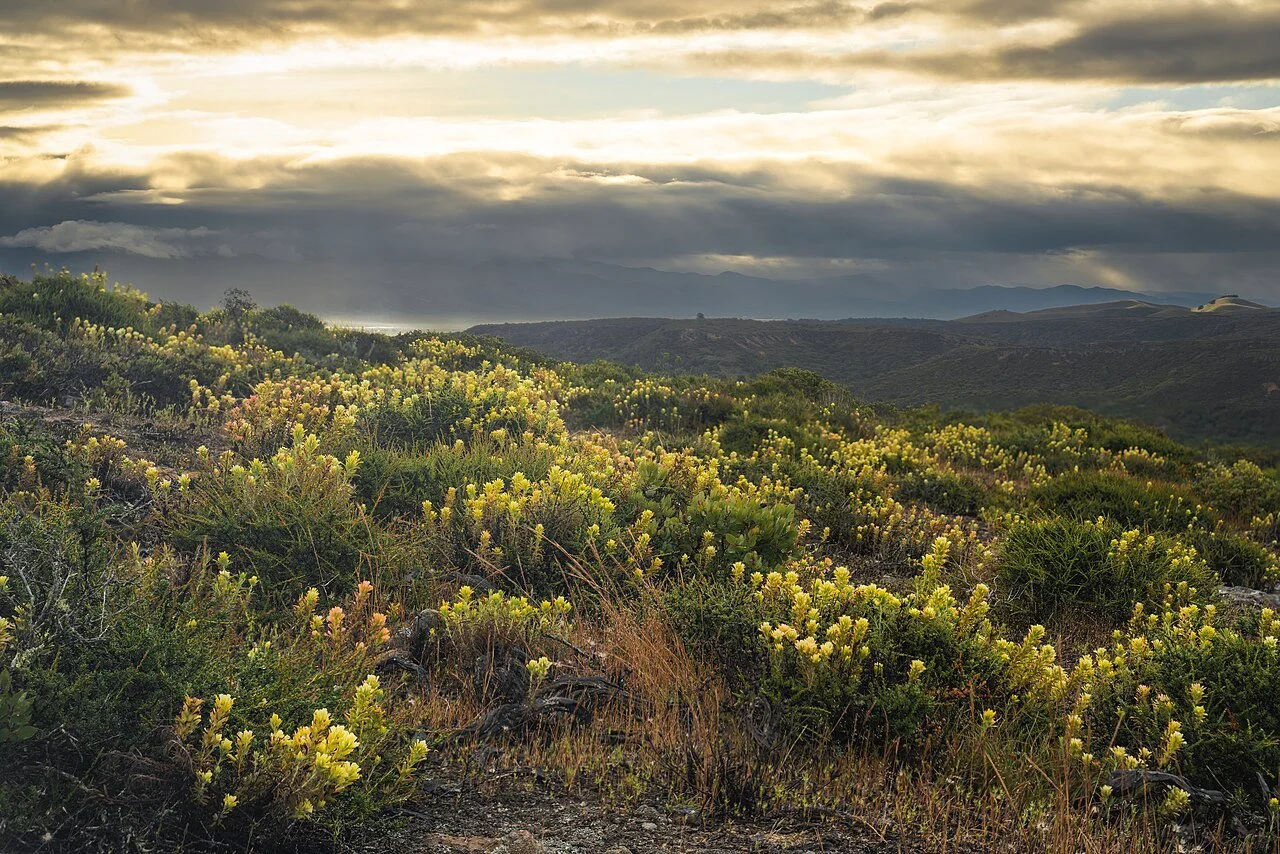
Photo: blmcalifornia / Public domain — source
_growing_in_Maritime_Chaparral_at_Fort_Ord_National_Monument_(52977796295).jpg)
California valley quail chick survival is written in the spring rain gauge more than any other single number. The 2026 water year is running well above normal, and the NorCal hen that is brooding this week is doing it on a green hillside that has not looked this good in three seasons. That is not coincidence — it is the biology of a ground-nesting bird that lives or dies on forbs and insects between May and July.
Forbs, Not Grass, Are the Diet
Hens need protein. Chicks need more. Both get it from insects and the seed and leaf material of annual forbs — filaree, clover, miner's lettuce, lupine — that explode on California hillsides after a wet winter. A dry spring means sparse forbs, which means sparse insect biomass, which means chicks starve in the first two weeks or never hatch in good numbers to begin with. Project Upland's rainfall-and-quail breakdown, referencing work from Leopold onward, ties California quail (Callipepla californica) productivity directly to this forb-insect complex.
Cover Is the Other Half
Forbs feed the brood, but chaparral, blackberry, coyote brush, and weedy fencerow tangles hide it. Spring rain builds that cover fast — too fast, in some edges, where invasive annual grasses outcompete the forbs. This is why CDFW and chapter-level Quail Forever projects keep prescribing fire, disking, and targeted grazing into valley quail habitat plans. Rain alone is not enough if the cover mosaic is broken.
What It Means for Fall 2026
CDFW's pre-season outlook already called for above-average quail abundance statewide, and a third wet winter stacks onto 2022 drought recovery. Foothill coveys from the Coast Ranges through the Sierra front are entering nesting season with nearly every ecological dial turned the right way. If late-April and May rains keep coming without mid-incubation hailstorms, the fall 2026 NorCal opener could be the strongest in a decade.
Where the Hunter Comes In
Hunters fund the monitoring that produces those forecasts. California Upland Game Bird Stamp dollars and Pittman-Robertson excise tax receipts pay for the biologists running brood counts on Sacramento Valley edges and Shasta-Trinity foothills right now. The Quail Forever North Valley Chapter and similar groups translate that science into boots-on-the-ground habitat work — brush piles, water catchments, food plots — in the same counties most CaliforniaUpland.com readers hunt.
Conservation Context
A wet spring without cover is wasted rainfall. Spend an hour on a North Valley QF habitat day and you are buying into the chain that makes this kind of chick survival possible.
Internal links:
External links:
Matt Gehrmann grew up hunting the Central Valley for pheasant, quail, and dove, and is based in the Bay Area. Read more → · Subscribe to the weekly digest →
Peter Burnham grew up in Nevada hunting chukar in the Sierras and dove in the valleys and hunts behind Alan (a three-year-old English cocker). Read more → · Subscribe to the weekly digest →