
Glassing Optics for California Chukar: What to Look for in Binoculars Before You Climb
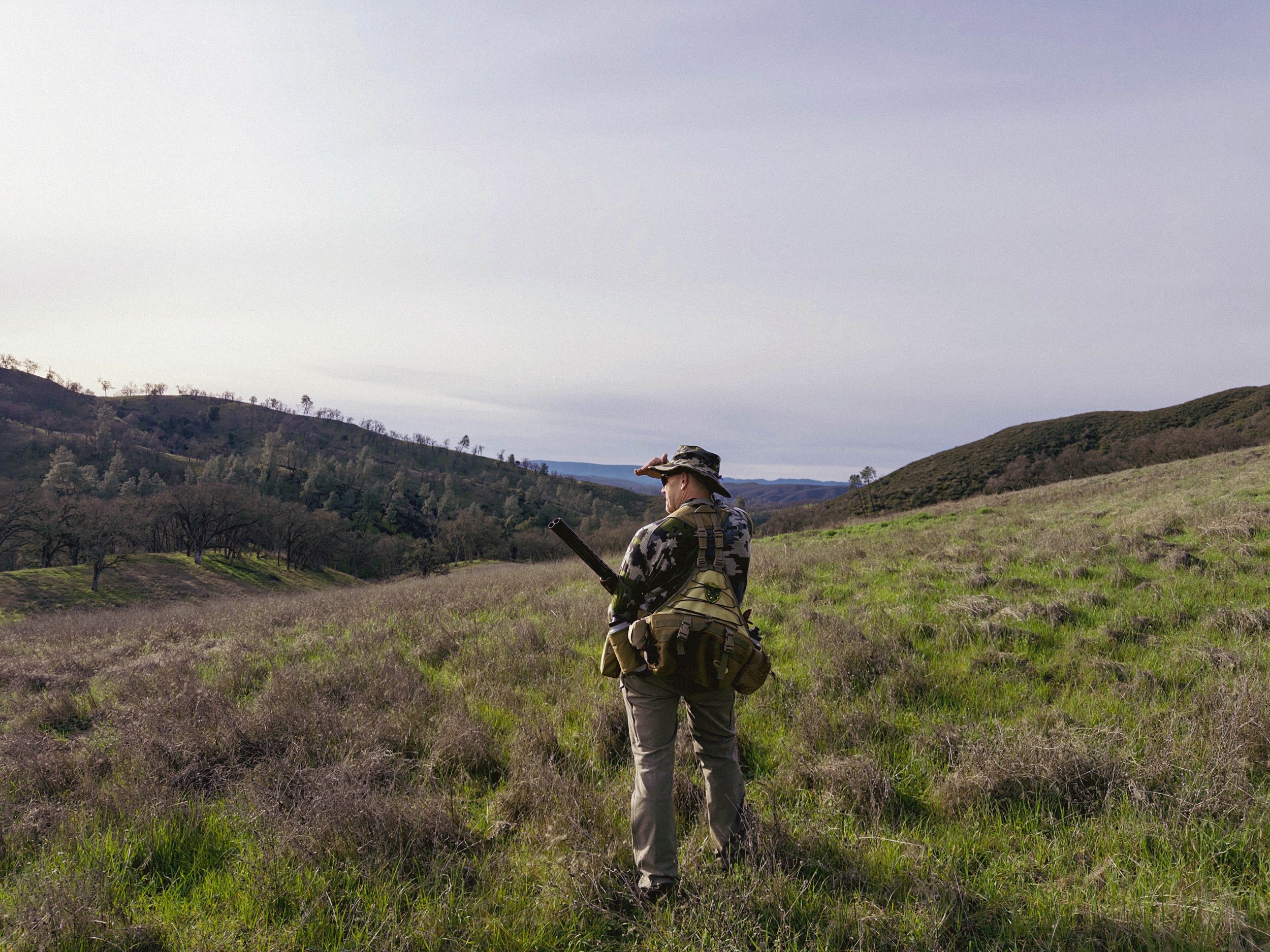
Matt might find more birds with binoculars - photo by Peter Burnham
Chukar live in country that punishes wasted steps, and the cheapest way to save your legs is to find birds before you walk to them. Good glassing optics — a binocular you can hold steady on a far slope and pick a covey out of cheatgrass and shale — may be the most underrated piece of kit a hunter packs into the Eastern Sierra. This is a planning piece on what to look for, drawing on manufacturer specs and the accounts of hunters who glass these canyons.
Why Glassing Matters in California Chukar Country
Alectoris chukar holds steep, broken canyons across the Owens Valley, the eastern Sierra escarpment, and the Modoc country, where a hunter can burn an hour climbing to a slope that never held birds. Hunters who write about it describe glassing the sunny sidehills and water seeps at first light and only committing to a climb once they've located birds or fresh sign — the same water-first logic mapped in this article. Optics turn that into a plan instead of a guess.
What to Look For
An 8x or 10x binocular in a 42mm objective is the western default — 10x42 reaches across a canyon, 8x42 holds steadier offhand. Glass quality and coatings matter more than raw magnification; a bright, high-contrast image is what separates a chukar's barred flank from shadowed rock. Steadying against a pack or tripod reveals birds the unsupported view walks right past. Vortex specs and Project Upland's buyer's guidance are worth comparing before a first trip.
Weight, Carry, and the Chest-Rig Problem
A bino harness keeps a full-size 10x42 off the neck, but it sits square on the sternum — exactly where a shotgun stock wants to travel during a fast mount, and a wild chukar flush is tough to match without anything interfering with your swing. Hunters who dislike that fix it with a quick-release or magnetic buckle, or by wearing the harness off-center.
Others carry less binocular instead. A compact monocular in a shell pocket does the same job — glass a slope, then it's pulled out of the way entirely. The Vortex Solo 10x36 weighs 9.7 ounces and runs 4.9 inches long, small enough to clip to webbing or ride loose in a pocket. The trade is real: a single eyepiece tires faster over a long glassing session, and a 36mm objective gathers less light than a 42mm binocular at the edges of the day. For short glassing bursts between climbs, that trade favors the pocket; for sitting a sidehill at first light, the binocular still wins.
The Rest of the Kit
A rangefinder helps judge how far a located covey really is, and a phone-scope adapter lets some high tech hunters mark a slope for the walk-in. None of this replaces boots and water in steep country, but glass is what tells the legs where to go. CDFW's own chukar hunting pages make the point: this is a bird of vast, vertical public land where finding birds is most of the problem.
Conservation Tie-Back
Glassing is low-impact scouting — it lets a hunter learn a drainage without trampling the spring-fed seeps chukar and native wildlife share. Those water sources, increasingly stressed by drought across the Eastern Sierra, are what guzzler programs and BLM water projects funded partly by upland stamp dollars work to protect. A hunter who glasses first walks lighter on the same water the birds can't live without.
Matt Gehrmann grew up hunting the Central Valley for pheasant, quail, and dove, and is based in the Bay Area. Read more → · Subscribe to the weekly digest →
Peter Burnham grew up in Nevada hunting chukar in the Sierras and dove in the valleys and hunts behind Alan (a three-year-old English cocker). Read more → · Subscribe to the weekly digest →