
The 20-Pound Rodent Tearing Up California's Best Mixed-Bag Habitat
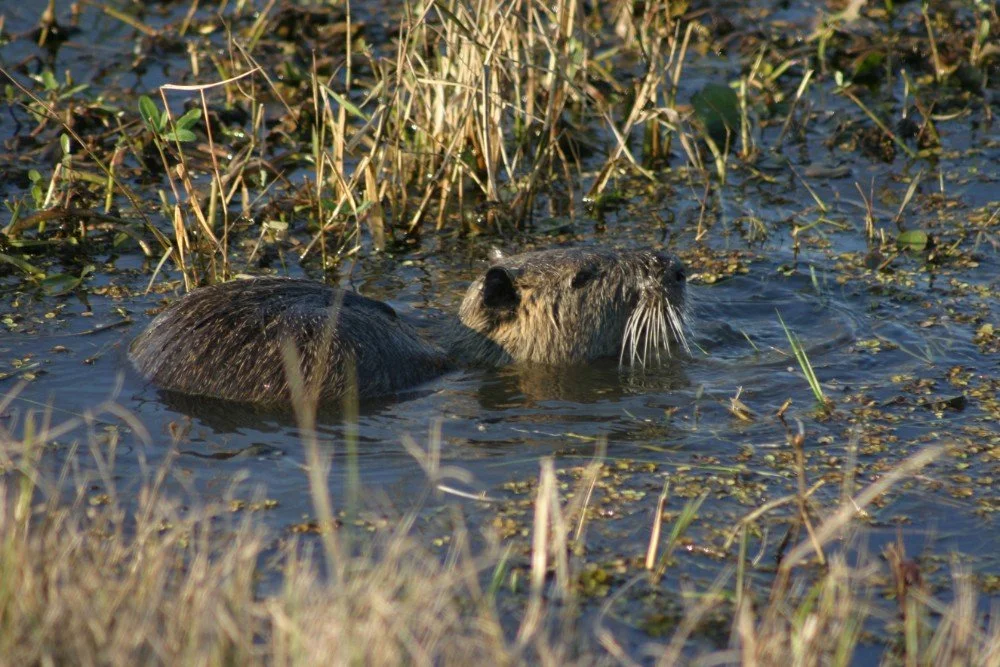
Nutria swimming in wetlands
Nutria are back in California and tearing through the wetland and riparian margins that doves, ducks, pheasants, and snipe depend on. A new CDFW genomic study tells us where they came from — and how bad it could get.
The flooded rice fields, tule margins, and riparian corridors of the Sacramento–San Joaquin Delta are some of the most productive mixed-bag habitat in California — pheasants, Wilson's snipe, mourning doves, and valley quail all work these edges through the winter season. Nutria (*Myocastor coypus*), a 20-pound South American rodent declared eradicated from California in the late 1970s, reappeared in Merced County in 2017 and has been spreading ever since. A new CDFW genomic study traces the invasion to a central Oregon population and suggests intentional — and illegal — reintroduction as the likely cause.
The damage is straightforward: nutria undercut marsh banks, consume emergent vegetation at the root, and convert productive tule edges into open mudflat. Every species that depends on wetland structure loses. CDFW's eradication program has removed nearly 8,000 animals since 2017 at a cost of roughly $5 million per year — but nutria can produce three litters annually, and the Delta's margins don't recover quickly. The birds that make California's lowland seasons worth hunting are on the losing end until eradication holds.
Source: CDFW Research Links California's Nutria Invasion to Pacific Northwest Population — California Department of Fish and Wildlife, April 7, 2026
Peter Burnham grew up in Nevada hunting chukar in the Sierras and dove in the valleys and hunts behind Alan (a three-year-old English cocker). Read more → · Subscribe to the weekly digest →
